
Caring for someone with Alzheimer’s isn’t a single moment or decision. It’s a journey that changes over time. Families often face emotional uncertainty, daily adjustments, and evolving responsibilities. Understanding what to expect and how to respond can make caregiving more manageable while preserving dignity, safety, and connection for everyone involved.
Alzheimer’s and Its Impact on Families
Alzheimer’s disease affects memory, thinking, behavior, and communication, gradually altering how a person interacts with the world. For families, this can mean watching a loved one experience difficulty with familiar tasks or forget important relationships. Many caregivers turn to home care as symptoms progress because it allows their loved one to remain in a familiar environment while receiving consistent support. Emotional stress is common among family caregivers, making education and early planning essential for long-term caregiving success.
How Home Care Service Helps in Alzheimer’s Support
Home care services play a vital role in supporting individuals living with Alzheimer’s disease and easing the emotional and physical burden on families. Professional caregivers provide consistent daily assistance, helping seniors maintain routines that reduce confusion and anxiety. These services also focus on safety supervision, medication reminders, and meaningful engagement to boost cognitive health. For families, home care offers peace of mind by ensuring their loved one receives compassionate, one-on-one attention in a familiar environment. This personalized approach supports dignity, preserves independence for as long as possible, and helps caregivers avoid burnout while staying involved in their loved one’s care journey.
Creating a Safe and Structured Daily Routine
Consistency can reduce anxiety and confusion in people living with Alzheimer’s. Establishing predictable schedules for meals, bathing, and rest creates a sense of control and stability. Environmental safety measures such as removing trip hazards, labeling rooms, and improving lighting can prevent accidents. Families managing advanced needs often explore 24-hour care to ensure supervision at all times, especially when wandering or nighttime confusion becomes a concern.
Communicating with Compassion and Patience
Effective communication shifts as Alzheimer’s progresses. Simple sentences, calm tones, and visual cues often work better than complex explanations. Avoid correcting or arguing, as this can increase agitation. Caregivers should focus on reassurance rather than accuracy. Short interactions paired with gentle redirection help seniors maintain emotional balance. When caregiving duties increase, families sometimes rely on hourly home care to provide breaks while maintaining continuity in communication and care routines.
Supporting Emotional Wellbeing and Dignity
Preserving dignity is just as important as meeting physical needs. Encourage independence where possible, even in small tasks, to promote self-worth. Familiar music, photos, and hobbies can spark positive emotions and reduce agitation. Trained caregivers experienced in dementia care often understand how to respond to emotional changes with empathy, helping families navigate mood swings and behavioral changes more confidently.
Common Challenges Caregivers Face
Alzheimer’s caregiving brings both physical and emotional challenges. Recognizing these early helps families prepare realistic expectations.
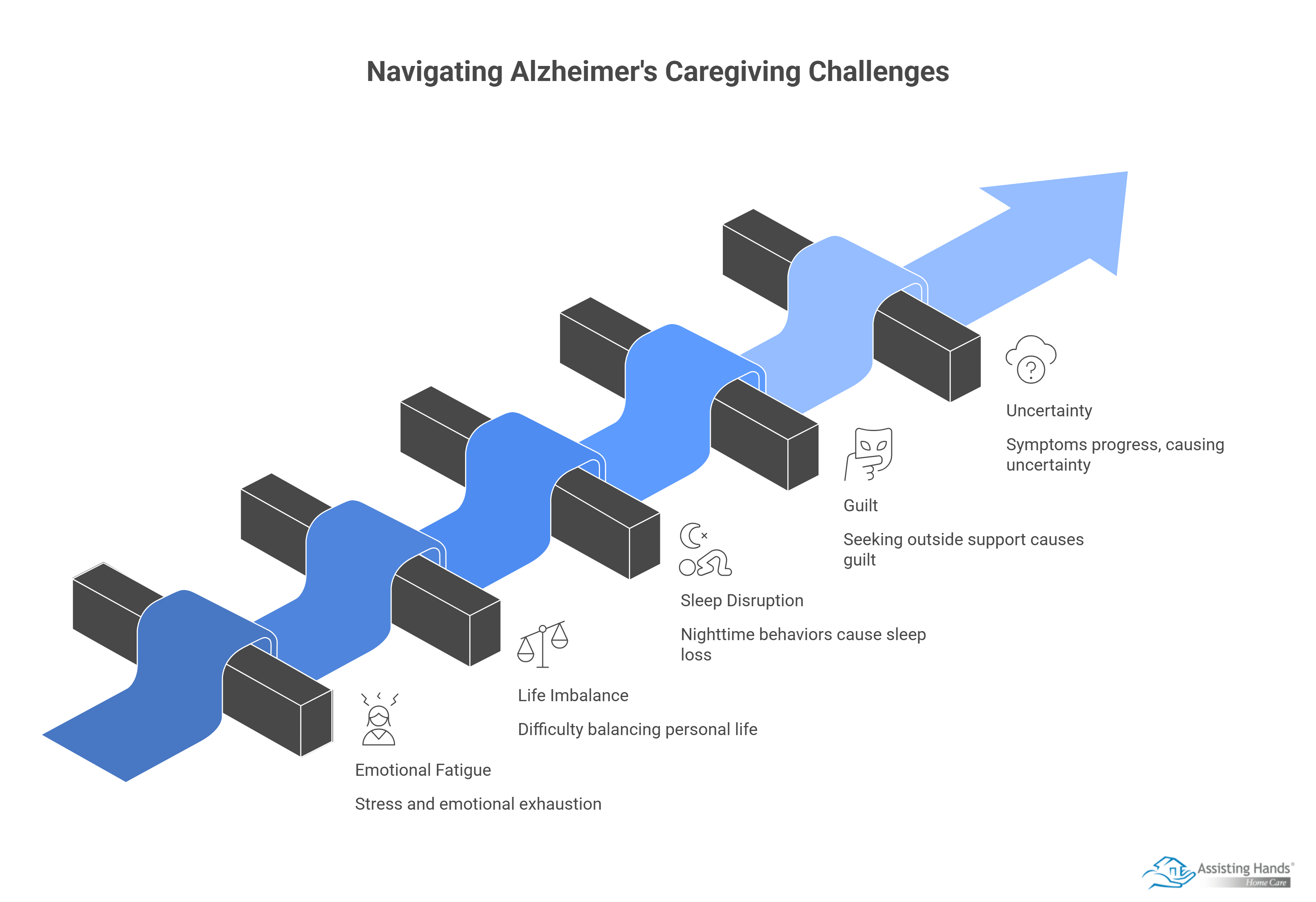
Caregivers commonly experience:
- Emotional fatigue and stress
- Difficulty balancing personal life and caregiving
- Sleep disruption due to nighttime behaviors
- Guilt when seeking outside support
- Uncertainty as symptoms progress
Acknowledging these challenges allows caregivers to seek help sooner and avoid burnout.
Practical Care Needs as Alzheimer’s Progresses
As the disease advances, daily tasks require increasing assistance. Personal hygiene, nutrition, and medication management become more complex. Monitoring hydration and preventing falls are also ongoing priorities. Below is a simple overview of care needs by stage:
| Alzheimer’s Stage | Primary Care Needs |
| Early Stage | Reminders, light supervision |
| Middle Stage | Help with daily activities |
| Late Stage | Full assistance and safety care |
Understanding progression helps families plan care without feeling overwhelmed.
Building a Strong Support Network
No caregiver should manage Alzheimer’s alone. Support groups, counseling, and respite options provide emotional relief and shared understanding. Involving multiple family members prevents exhaustion and enhances care consistency. Education from healthcare professionals helps families adapt strategies as needs evolve. Strong support networks can improve outcomes for both caregivers and loved ones living with Alzheimer’s.
Alzheimer’s Care Guidance from Lifestar Home Care in Oklahoma City
Caring for a loved one with Alzheimer’s can be emotionally and physically challenging for families. Lifestar Home Care supports caregivers by providing reliable and compassionate home care Oklahoma City services tailored to each senior’s needs. Our trained caregivers assist with daily routines, memory support, personal care, and creating a safe, structured environment that reduces confusion and stress. We also guide families with practical caregiving tips and consistent support, helping them feel more confident while ensuring their loved ones receive respectful, high-quality care at home.
Frequently Asked Questions
What’s the hardest stage of Alzheimer’s for caregivers?
+
The middle stage is often the most challenging due to behavioral changes and increased supervision needs. Caregivers face emotional strain as communication becomes more difficult. Support and education are critical during this phase.
How can families reduce agitation in Alzheimer’s patients?+
Maintaining routines, minimizing noise, and offering reassurance can reduce agitation. Calm responses and familiar environments are especially effective. Avoid overstimulation whenever possible.
When should families consider professional help?+
Professional support is helpful when safety becomes a concern or caregiving affects family wellbeing. Early support can prevent burnout. It also ensures consistent care as needs increase.
Can Alzheimer’s patients stay at home safely?+
Yes, many individuals can remain at home with proper safety measures and supervision. Care plans should adapt as symptoms change. Regular reassessment is important.
How do caregivers cope emotionally?+
Caregivers benefit from support groups, scheduled breaks, and open communication. Acknowledging stress without guilt is essential. Self-care enhances caregiving quality.