
Caregivers can encourage independence in seniors by adapting the home environment, supporting safe participation in daily tasks, and promoting decision-making. Having some measure of autonomy not only boosts self-esteem but also helps seniors maintain physical and cognitive function for longer. By stepping back and allowing seniors to do what they can for themselves, caregivers foster a sense of purpose and dignity.
How Can Home Modifications Support Self-Reliance?
Simple changes to the living environment can dramatically increase a senior’s ability to perform daily tasks without help. When a home is modified to fit a senior’s changing physical abilities, the individual relies less on others for basic mobility. Installing grab bars in the bathroom, securing loose rugs, and improving lighting in hallways allow seniors to move freely without fear of falling. Furthermore, placing frequently used items—like dishes, clothes, or toiletries—on lower shelves ensures they remain accessible without the need for reaching or climbing.
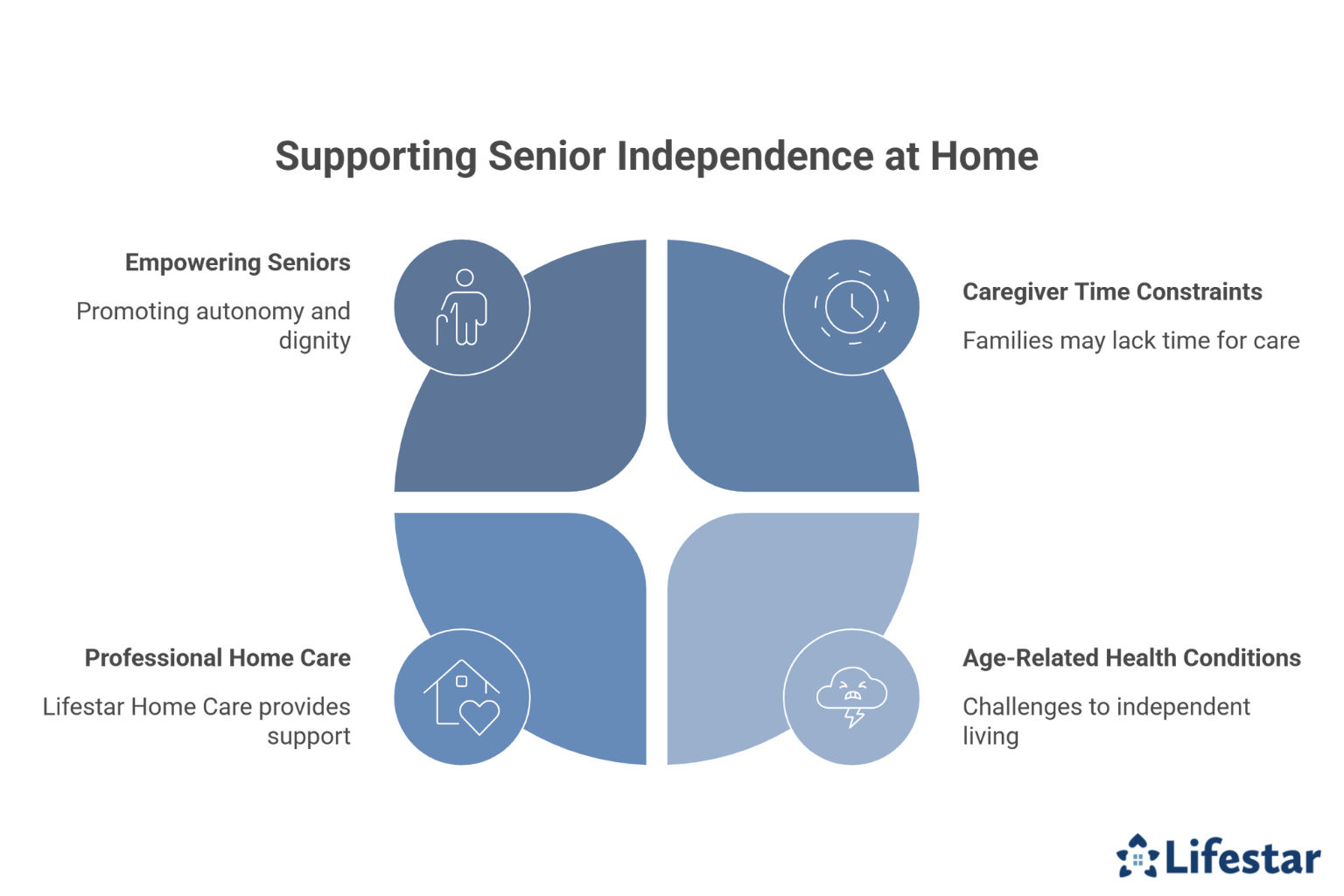
Living independently is important for seniors who want to maintain a high quality of life. For some, this simply means receiving help with tasks that have become more challenging to manage over time. Even when families have the best intentions, they may not have the time to provide the care their elderly loved ones need and deserve. If your loved one needs help for a few hours a day or a few days a week, reach out to Lifestar Home Care, a trusted provider of respite and overnight care for Oklahoma City seniors and their families.
Which Daily Tasks Should Seniors Perform Themselves?
Seniors should handle any personal care or household tasks they can safely manage, even if it takes them longer to complete. The goal is to assist only when necessary rather than taking over completely, a concept often referred to as “doing with, not for.” Caregivers can break complex activities into smaller manageable steps to ensure success.
- Personal grooming – Encourage independently brushing hair, shaving, or brushing teeth.
- Meal preparation – Ask for help washing vegetables, stirring ingredients, or setting the table.
- Dressing – Allow your loved one to choose outfits and manage buttons or zippers to the best of his or her ability.
Some seniors only require help with a few daily tasks so they can maintain their independence. However, those living with serious illnesses may need more extensive assistance. Luckily, there is professional 24-hour care for seniors living in Oklahoma City and surrounding areas in central Oklahoma. Home can be a safer and more comfortable place for your loved one to live with the help of an expertly trained and dedicated live-in caregiver.
Why Is Decision-Making Important for Senior Autonomy?
Retaining the power of choice is fundamental to feeling independent and respected. When caregivers allow seniors to make decisions about their daily routines, diet, or leisure activities, it reinforces their sense of control over their own lives. Even small choices like what to wear or what to watch on television validate their preferences and keep their cognitive skills sharp. Avoiding the urge to micromanage these small details can preserve your loved one’s identity and prevent feelings of helplessness.
How Does Physical Activity Promote Independence?
Regular movement preserves the strength and balance required to live independently. Encouraging seniors to participate in light exercises, such as walking, stretching, or chair yoga, can prevent the physical decline that often necessitates high-level care.
- Muscle strength – Builds the power needed for standing up from chairs and walking
- Coordination – Improves balance to prevent dangerous falls
- Flexibility – Enhances joint movement for dressing and bathing
What Tools Can Assist with Independent Living?
Assistive devices bridge the gap between ability and disability, allowing seniors to function without human intervention. Tools like button hooks, jar openers, and long-handled shoehorns turn impossible tasks into manageable ones. Utilizing pill organizers or automatic medication dispensers also ensures health management remains in your loved one’s hands rather than becoming solely your responsibility.
There are a variety of age-related health conditions that can make it more challenging for seniors to live independently. However, many of the challenges they face can be easier to manage if they are supported by professional home care Oklahoma City families can rely on. At Lifestar Home Care, our expertly trained caregivers are here to keep your loved one safe and comfortable while aging in place. To create a customized home care plan for your loved one, call Lifestar Home Care today.
Frequently Asked Questions
Is it safe to let a senior live alone?
+
Safety depends entirely on the individual’s cognitive and physical health, so a professional assessment is recommended. If memory issues or high fall risks are present, your loved one likely requires supervision or a medical alert system.
How do I handle a senior who resists help?
+
Frame the assistance as a partnership or a way to help you rather than implying your loved one is incapable. Respect your loved one’s boundaries and introduce changes gradually to avoid overwhelming him or her.
Can technology really help seniors stay independent?
+
Yes, smart home devices, voice-activated assistants, and wearable health monitors allow seniors to control their environments and get help easily. These tools provide a safety net that reduces the need for constant in-person monitoring.
What if a senior takes a long time to complete a task?
+
Patience is essential. Rushing your loved one can cause anxiety and increase the risk of mistakes or accidents. It’s more beneficial for your loved one’s long-term independence to finish the task without assistance, even if it requires extra time.
Are there emotional benefits to independence?
+
Absolutely. Maintaining independence reduces rates of depression and anxiety in older adults. Feeling useful and capable provides a critical sense of purpose that boosts overall mental health.