
Table of Content
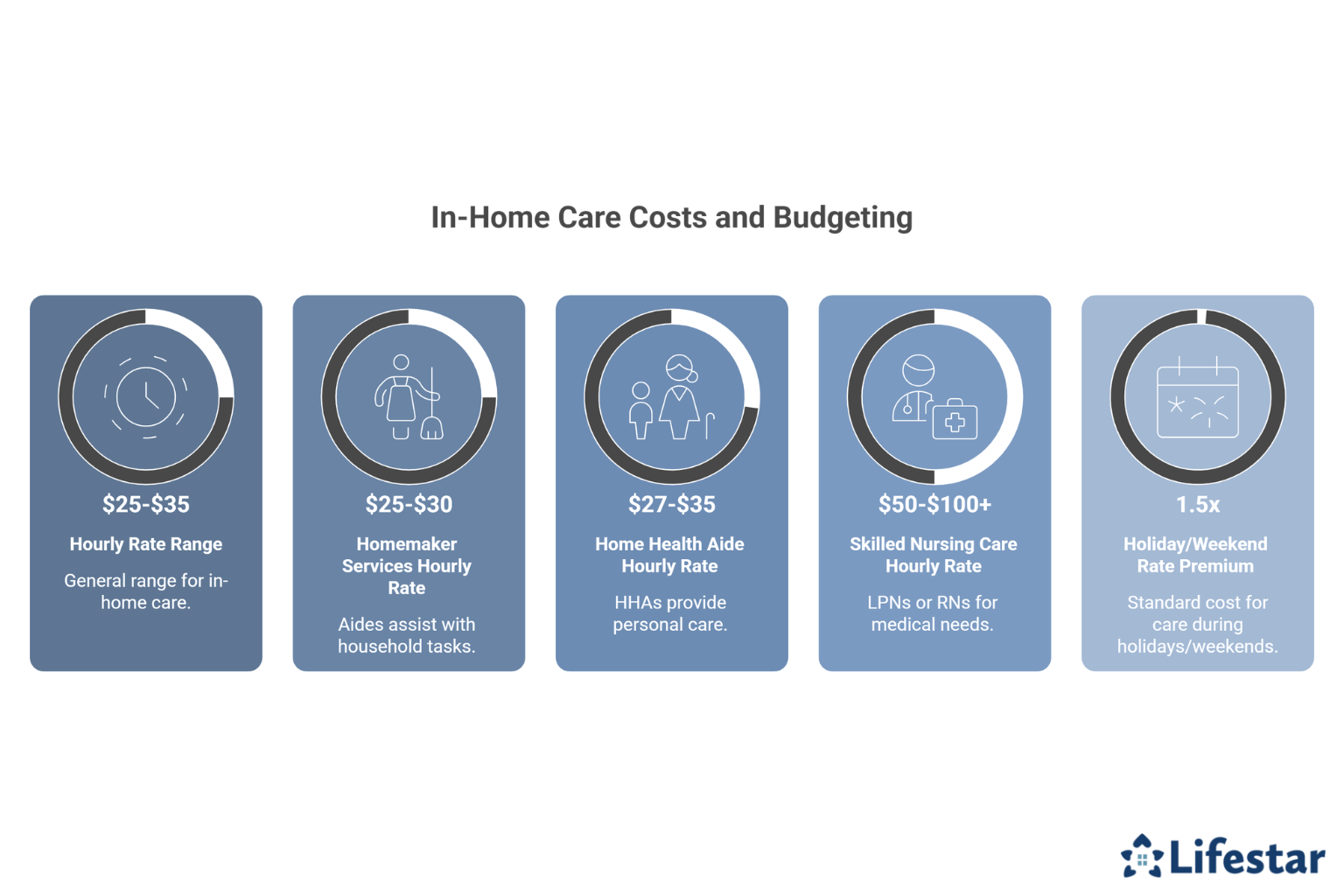
In-home care costs vary significantly by location and level of care but generally range from $25 to $35 per hour, requiring careful budgeting through personal savings, insurance, and government aid. Understanding these expenses early allows families to create sustainable financial plans that ensure their senior loved ones receive necessary support without compromising their own financial stability.
What Factors Influence the Cost of In-Home Care?
Several variables determine the final bill for in-home care services, making it essential to assess specific needs before estimating costs. The most significant factor is the level of care required. Simple companionship or homemaking services cost less than specialized medical care provided by registered nurses or physical therapists.
Geographic location also plays a major role, as labor costs and cost of living differences mean rates in urban centers like New York or San Francisco are often much higher than in rural areas. Additionally, the frequency of care—whether a few hours a week or 24/7 live-in support—will directly impact the total monthly expense. Finally, hiring through an agency typically costs more than hiring a private caregiver directly, though agencies handle background checks, insurance, and payroll taxes.
The type of home care Oklahoma City seniors need can vary. Some need assistance a few hours a day, while others require more extensive around-the-clock assistance. At Lifestar Home Care, we tailor our care plans based on each senior’s individual care needs, and the plans can be adjusted at any time. We are a trusted provider of respite and 24-hour care, and we also offer specialized Alzheimer’s, dementia, Parkinson’s, and stroke care for seniors.
How Do Hourly Rates Compare Across Different Services?
Hourly rates fluctuate based on the specific type of professional needed.
- Homemaker services – These aides assist with household tasks like cleaning, meal prep, and shopping. Rates typically average between $25 and $30 per hour.
- Home health aides (HHA) – HHAs provide personal care such as bathing, dressing, and grooming. Their rates are slightly higher, averaging around $27 to $35 per hour.
- Skilled nursing care – For medical needs like wound care, injections, or monitoring vital signs, a Licensed Practical Nurse (LPN) or Registered Nurse (RN) is required. These professionals command much higher rates, often exceeding $50 to $100+ per hour depending on the complexity of care.
Family caregivers need to care for their own wellbeing. If you’re caring for an aging loved one and are feeling overwhelmed, consider hiring a professional caregiver to provide Oklahoma City overnight home care or respite care for a few hours a day. Families who want to prevent burnout can turn to Lifestar Home Care. One of our professional caregivers can assist your loved one at home while you take a nap, go to work, run errands, get a good night’s sleep, or go on vacation.
What Are the Best Ways to Pay for In-Home Care?
Most families use a combination of payment methods to cover in-home care expenses.
- Private pay (out of pocket) – This is the most common method, using personal savings, retirement funds, or income.
- Long-term care insurance – Policies specifically designed to cover services that standard health insurance doesn’t, though benefits vary by plan.
- Government programs – Medicaid (for those who qualify financially), Veterans Affairs (VA) benefits (for eligible veterans and spouses), and state-specific non-Medicaid programs can offer substantial support.
- Life insurance conversions – Some seniors choose to convert their life insurance policies into Long-Term Care Benefit Plans to receive monthly payments for care.
- Reverse mortgages – Homeowners aged 62 and older may tap into their home equity to pay for care expenses while remaining in their homes.
How Can You Create a Realistic Budget for Care?
Creating a sustainable budget starts with a clear assessment of current assets and projected expenses. First, tally all monthly income sources, including Social Security, pensions, and investment dividends. Next, list all current expenses and determine how much discretionary income is available for care.
Once you have a baseline, estimate the number of hours of care needed per week and multiply this by the average hourly rate in your area. If there’s a gap between your available income and the projected cost, examine which assets (like savings or home equity) can be liquidated or utilized. It’s also wise to build in a buffer for future rate increases or escalating care needs as your loved one’s condition changes.
What Are the Hidden Costs to Watch Out For?
Beyond the hourly rate, several hidden costs can catch families off guard.
- Agency fees – Some agencies charge initial assessment fees or administrative fees on top of hourly rates.
- Holiday and weekend rates – Care provided during holidays, weekends, or overnight shifts often comes at a premium rate, sometimes 1.5 times the standard cost.
- Supplies and equipment – Families are usually responsible for purchasing medical supplies, incontinence products, and home modifications (like grab bars or ramps).
- Travel costs – If caregivers use their own vehicles to transport your loved one to appointments or run errands, mileage reimbursement is typically expected.
Financial planning can be especially important for families whose senior loved ones need around-the-clock-assistance. Every senior has different needs when aging in place. Some simply need occasional assistance with household chores, while others may be managing serious illnesses and require more extensive around-the-clock-care. Families can count on Lifestar Home Care to provide their loved ones with the high-quality 24-hour home care Oklahoma City seniors need and deserve. To hire a dedicated caregiver, call Lifestar Home Care today.
Frequently Asked Questions
Does Medicare pay for in-home care?
+
Medicare generally covers short-term, intermittent skilled nursing or therapy if prescribed by a doctor, but it doesn’t pay for long-term custodial care (nonmedical assistance like bathing or dressing).
Is in-home care tax-deductible?
+
Yes, in many cases, if the care is medically necessary and the costs exceed 7.5 percent of your adjusted gross income, you may be able to deduct them as medical expenses. Consult a tax professional for specifics.
How can I find out the average cost of care in my specific city?
+
Resources like the Genworth Cost of Care Survey provide annual data on median costs for home caregivers and homemaker services by state and zip code.
Can family members get paid to provide in-home care?
+
Yes. Through certain Medicaid programs (like Cash and Counseling) or VA programs, eligible seniors can receive funds to hire their own caregivers, including family members.
What’s the difference between a live-in caregiver and 24-hour care?
+
A live-in caregiver stays in the home and requires 8 hours of sleep (usually 5 hours uninterrupted), while 24-hour care involves two or three different caregivers working shifts so someone is awake and available at all times.