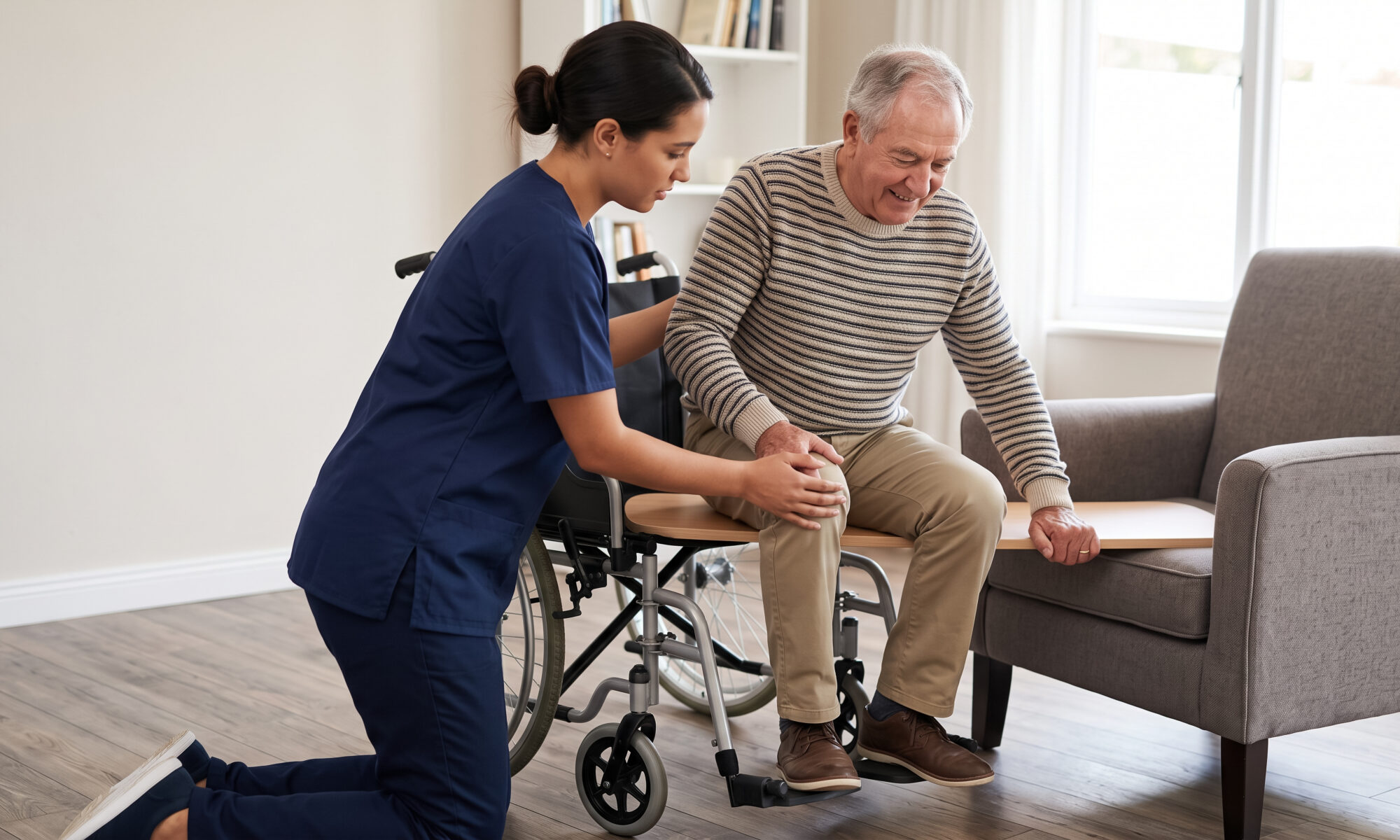
Preventing physical injury in home care requires caregivers to use proper body mechanics, assistive equipment, and safe transfer techniques, protecting both the caregiver and the person receiving care from strain, falls, and serious injury.
Home care environments present real physical risks for caregivers and seniors alike. Learning and applying safe lifting and transfer techniques can significantly reduce those risks.
Why Is Safe Lifting Important in Home Care?
Improper lifting is one of the leading causes of injury among home caregivers. According to the Bureau of Labor Statistics, healthcare workers experience some of the highest rates of musculoskeletal injuries of any profession, many of which stem from unsafe lifting practices.
- Repeated improper lifting leads to chronic back pain, muscle strains, and joint damage.
- Falls during transfers are a leading cause of injury for seniors receiving home care.
- Preventable injuries drive up healthcare costs and caregiver burnout.
What Are the Core Principles of Proper Body Mechanics?
Good body mechanics form the foundation of safe lifting. Caregivers who master these principles dramatically reduce their risk of injury.
- Keep your back straight. Avoid bending at the waist—hinge at the hips and knees instead.
- Position your feet shoulder-width apart to create a stable base before any lift.
- Hold your loved one close to your body to reduce the strain on your spine.
- Never twist while lifting—pivot your feet to change direction instead.
- Tighten your core muscles before and during the lift to protect your lower back.
What Assistive Equipment Can Reduce Lifting Risks?
The right equipment can eliminate the need for manual lifting altogether in many situations. Common assistive tools used in home care include:
- Gait belts – A sturdy belt worn around your loved one’s waist that gives you a secure grip during transfers and walking assistance
- Transfer boards – Smooth boards that bridge the gap between two surfaces (e.g., bed to wheelchair), allowing your loved one to slide rather than be lifted
- Hoyer lifts (mechanical lifts) – Hydraulic or electric devices that safely lift and transfer seniors with limited mobility
- Bed rails and grab bars – Fixed supports that allow seniors to assist with their own repositioning, reducing caregiver load
A trained caregiver with experience in caring for seniors with mobility limitations can be a fantastic resource for family members. The type of home care Oklahoma City seniors need can vary. Some need assistance a few hours a day, while others require more extensive around-the-clock assistance. At Lifestar Home Care, we tailor our care plans based on each senior’s individual care needs, and the plans can be adjusted at any time. We are a trusted provider of respite and 24-hour care, and we also offer specialized Alzheimer’s, dementia, Parkinson’s, and stroke care for seniors.
How Should Caregivers Safely Perform Common Transfers?
Each transfer situation requires a specific approach. Here are safe techniques for the most common scenarios:
- Bed to wheelchair – Lock the wheelchair, position it at a 45-degree angle to the bed, use a gait belt, and guide your loved one to pivot. Never lift him or her by the arms.
- Chair to standing – Position your feet outside your loved one’s feet, use a gait belt, and help him or her lean forward (“nose over toes”) before rising.
- Repositioning in bed – Use a draw sheet (a folded flat sheet under your loved one) to slide rather than drag. Always work with a second caregiver when possible.
- Assisting with walking – Stand to your loved one’s weaker side, hold the gait belt with an underhand grip, and match his or her pace.
How Can Caregivers Protect Themselves from Long-Term Injury?
Sustainability matters in home care. A caregiver who is injured cannot provide effective support, so self-care is an essential part of the job.
- Stretch before and after shifts, focusing on the back, shoulders, and legs.
- Communicate clearly with your loved one before each transfer—a prepared individual can assist more effectively.
- Ask for help. No transfer should be forced alone if the risk is too great.
- Report pain or discomfort early before it becomes a chronic problem.
- Regularly review and refresh your technique—habits drift over time.
Caring for senior loved ones can be rewarding, but it can also be overwhelming. Family caregivers need to care for their own wellbeing. If you’re caring for an aging loved one and are feeling overwhelmed, consider hiring a professional caregiver to provide Oklahoma City overnight home care or respite care for a few hours a day. Families who want to prevent burnout can turn to Lifestar Home Care. One of our professional caregivers can assist your loved one at home while you take a nap, go to work, run errands, get a good night’s sleep, or go on vacation.
If you’re the primary family caregiver for a senior loved one living in central Oklahoma, Oklahoma City 24-hour home care is available around the clock if your loved one’s health has become too difficult to manage without professional expertise. At Lifestar Home Care, we take measures to help seniors prevent illness and injury by assisting with exercise and mobility, preparing nutritious meals, helping with bathing and other personal hygiene tasks, and much more. To learn about our quality-assured services, give us a call today.
Frequently Asked Questions
What’s the most common injury caregivers experience during lifting and transfers?
+
Lower back injuries are the most frequent, typically caused by poor posture, twisting during lifts, or attempting to lift someone without assistance or proper equipment.
How do I know when I need a second caregiver to assist with a transfer?
+
If your loved one cannot bear any weight, is significantly larger than you, or is uncooperative during transfers, a second caregiver or mechanical lift should always be used.
Is a gait belt necessary for every transfer?
+
A gait belt is strongly recommended for any standing or walking transfer, as it provides a secure ergonomic grip and reduces the risk of your loved one slipping.
How often should caregivers receive training on safe lifting techniques?
+
Caregivers should receive initial training before working independently and refresher training at least annually or immediately following any lifting-related incident.
Can seniors be taught to assist with their own transfers?
+
Yes. Seniors who are physically able should be encouraged to participate actively in transfers, as this reduces caregiver strain and supports the senior’s own strength and independence.