
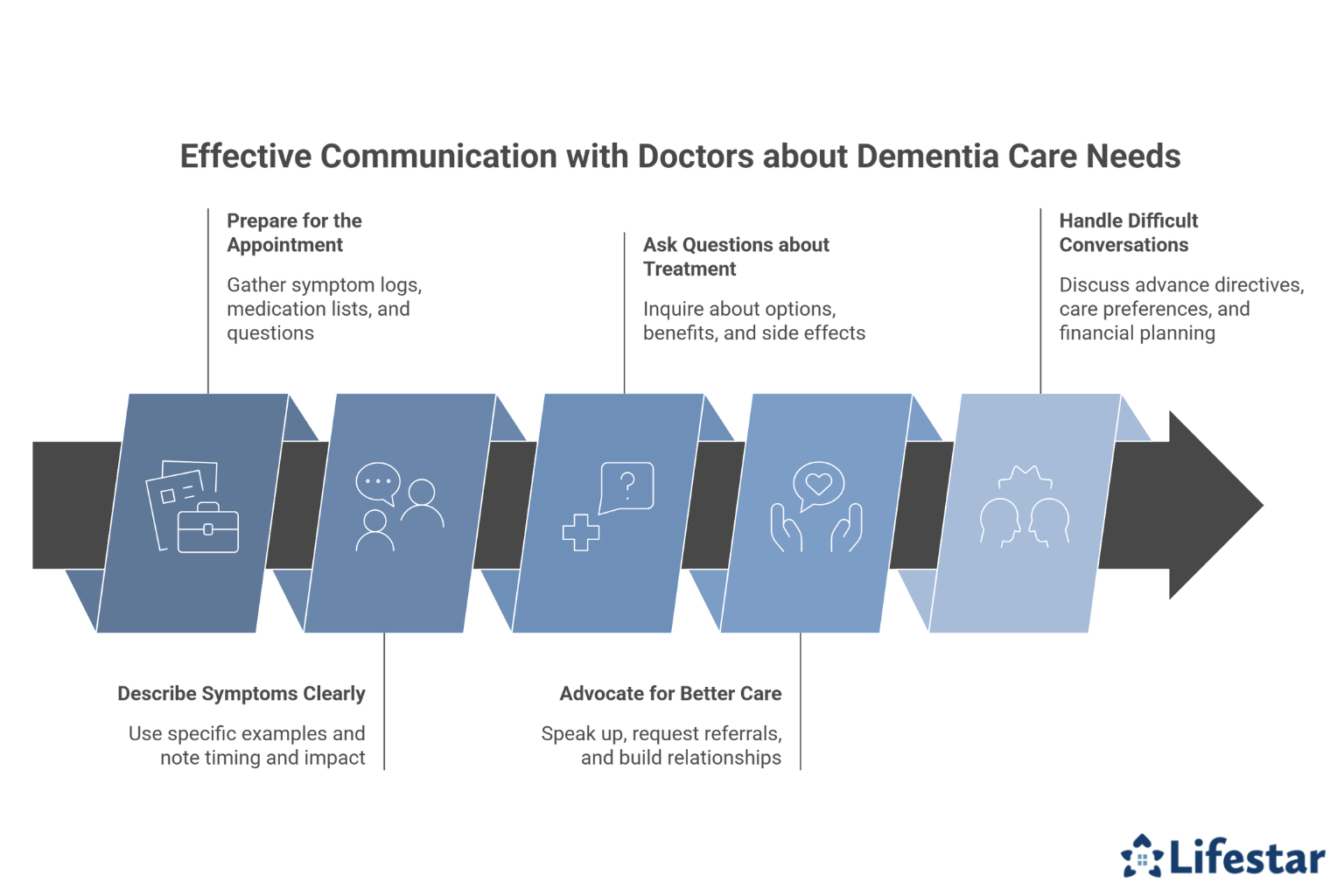
Effective communication with doctors about dementia care needs starts with preparation: bring a list of specific symptoms, concerns, and questions to your appointment. Clear, organized information helps the doctor understand the situation and provide better guidance. Building a collaborative relationship with your senior loved one’s healthcare team ensures your loved one receives the best possible care.
What Should I Bring to My Appointment?
Preparation is essential for productive medical conversations. Gather relevant information before the visit to make the most of your time with the doctor.
Bring these items to your appointment:
- A symptom log – Document changes in memory, behavior, mood, or daily functioning over the past few weeks or months.
- Current medication list – Include all prescriptions, over-the-counter drugs, and supplements with dosages.
- Medical history – Note any recent hospitalizations, falls, or health changes.
- List of questions – Write down specific concerns or questions you want addressed.
- Care notebook – Track patterns you’ve noticed, such as confusion at certain times of day or difficulty with specific tasks.
Having this information organized allows the doctor to see the full picture and make informed recommendations.
Keeping track of your loved one’s symptoms, conditions, and medications can be challenging, and a caregiver with expertise in dementia care can be a fantastic source of support. The type of home care Oklahoma City seniors need can vary. Some need assistance a few hours a day, while others require more extensive around-the-clock assistance. At Lifestar Home Care, we tailor our care plans based on each senior’s individual care needs, and the plans can be adjusted at any time. We are a trusted provider of respite and 24-hour care, and we also offer specialized Alzheimer’s, dementia, Parkinson’s, and stroke care for seniors.
How Do I Describe Symptoms Clearly?
Specific examples help doctors understand what you’re experiencing better than general statements. Instead of saying “Mom seems confused,” describe concrete situations.
Use these strategies to communicate symptoms effectively:
- Be specific – Rather than “She’s forgetful,” say “She asks the same question five times within an hour.”
- Note timing – Mention when symptoms occur—morning, evening, or throughout the day.
- Describe impact – Explain how symptoms affect daily activities like cooking, bathing, or taking medications.
- Share safety concerns – Report any wandering, falls, or other dangerous behaviors immediately.
- Mention changes – Highlight what’s different from previous functioning levels.
Concrete details give doctors the information they need to assess severity and progression accurately.
What Questions Should I Ask about Treatment Options?
Understanding available treatments and their implications helps you make informed decisions about your loved one’s care. Don’t hesitate to ask for clarification on anything you don’t understand.
Consider asking these questions:
- What treatment options are available at this stage?
- What are the benefits and side effects of each medication?
- How will we know if the treatment is working?
- Are there non-medication approaches we should try?
- What support services or resources do you recommend?
- When should we schedule the next follow-up appointment?
- What changes should prompt me to call before the next visit?
Take notes during the appointment or bring someone who can help you remember important information.
Seniors living with serious health conditions often need extensive assistance in and outside the home. Lifestar Home Care is a trusted provider of Oklahoma City 24-hour care. Our caregivers are expertly trained to assist seniors with bathing, grooming, light housekeeping, and various other daily tasks, and we also offer specialized Alzheimer’s, dementia, stroke, and Parkinson’s care.
How Can I Advocate for Better Care?
Advocacy ensures your loved one’s needs are met and concerns are addressed. You’re an essential member of the care team.
Effective advocacy strategies include:
- Speak up – If something doesn’t feel right or if you notice negative medication side effects, voice your concerns.
- Request referrals – Ask about specialists like neurologists, geriatric psychiatrists, or memory care experts when needed.
- Seek second opinions – You have the right to consult other doctors if you’re uncertain about a diagnosis or treatment plan.
- Build relationships – Establish rapport with the entire care team, including nurses and office staff.
- Stay organized – Keep copies of all medical records, test results, and care plans in one accessible place.
Remember that you know your loved one best. Your observations and insights are valuable to the medical team.
How Do I Handle Difficult Conversations about Future Care?
Discussing future care needs can be emotional, but planning ahead ensures your loved one’s wishes are honored. These conversations are easier when started early.
Approach these topics thoughtfully:
- Advance directives – Ask about healthcare proxies, living wills, and do-not-resuscitate orders.
- Care preferences – Discuss options like in-home care, assisted living, or memory care facilities.
- Financial planning – Inquire about resources for long-term care costs and insurance coverage.
- Clinical trials – Ask if your loved one might be eligible for research studies.
- End-of-life care – While difficult, understanding palliative and hospice care options provides peace of mind.
Doctors can connect you with social workers, elder care attorneys, and other professionals who specialize in these areas.
Even when families have the best intentions, caring for a senior loved one with dementia can be challenging. Fortunately, Lifestar Home Care is here to help. We are a leading provider of Oklahoma City dementia care. Families can take advantage of our flexible and customizable care plans, and our caregivers always stay up to date on the latest developments in senior care. To learn about our high-quality in-home care options, give us a call today.
Frequently Asked Questions
Should I involve my loved one in doctor appointments?
+
Yes, include your loved one as much as possible, especially in the early stages. Your loved one’s input is valuable, and participation helps him or her maintain dignity and autonomy.
How often should we see the doctor for dementia care?
+
Frequency varies based on disease stage and stability. Typically, visits occur every 3–6 months, with more frequent appointments during medication adjustments or significant changes.
What if the doctor doesn’t take my concerns seriously?
+
Be persistent and specific about your observations. If concerns continue to be dismissed, consider seeking care from a dementia specialist or finding a different provider.
Can I call the doctor between appointments?
+
Yes, contact the office if you notice sudden changes, safety concerns, or severe medication side effects. Most practices have protocols for urgent questions.
Should I bring a family member to appointments? +
Having another person present can be helpful. The individual can take notes, ask questions you might forget, and provide additional observations about your loved one’s condition.