Table of Content
- 1 Understanding the Emotional Impact of Dementia on Families
- 2 Coping with Dementia for Caregivers: Emotional Realities
- 3 Managing Grief, Loss, and Role Reversal in Dementia Care
- 4 Coping with Dementia Behavior Changes Compassionately
- 5 The Importance of Emotional Consistency and Routine
- 6 Emotional Self-Care Strategies for Dementia Caregivers
- 7 Effective emotional coping strategies include:
- 8 How Emotional Support Enhances Dementia Care Outcomes
- 9 Emotional Challenges Across the Stages of Dementia
- 10 Building Emotional Resilience for Long-Term Dementia Care
- 11 Why Emotional Awareness Is Essential in Dementia Care Plans
- 12 Frequently Asked Questions
Caring for a senior loved one with dementia is emotionally complex because it involves ongoing change, uncertainty, and deep personal connection. Families often experience shifting emotions as memory, behavior, and communication evolve over time. Understanding these emotional challenges helps caregivers respond with patience, compassion, and confidence while protecting their own wellbeing.
Understanding the Emotional Impact of Dementia on Families
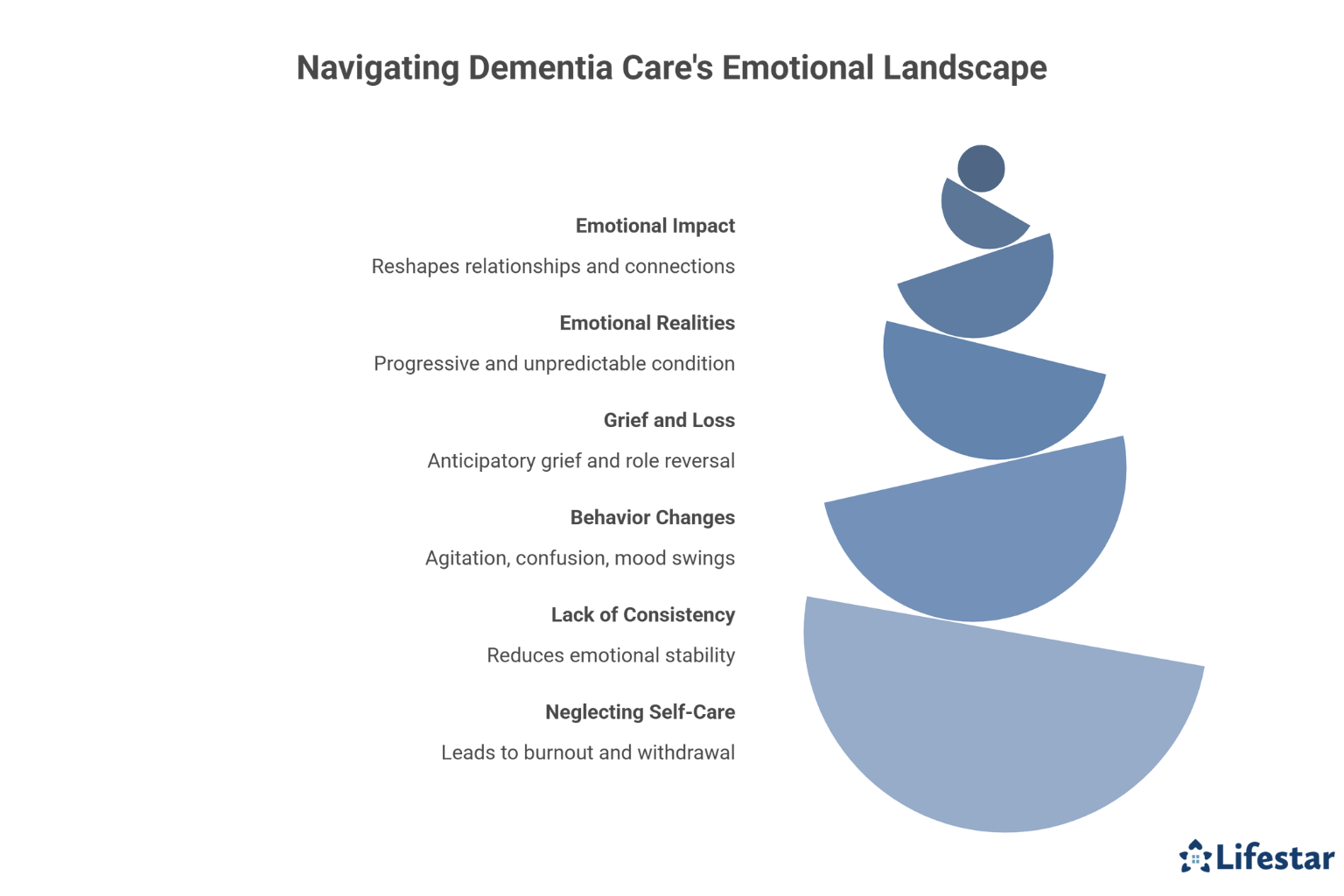
Families who choose home care often do so because dementia affects more than memory it reshapes relationships. For many families, coping with dementia patients means learning how to manage emotional distance while staying connected. Watching a loved one face difficulty with recognition, communication, or independence can bring grief, frustration, and sadness. Many caregivers mourn the gradual loss of shared memories while still caring for the person they love. Recognizing these emotions early helps families avoid burnout and develop healthier coping strategies that support both the caregiver and the individual living with dementia.
Coping with Dementia for Caregivers: Emotional Realities
Coping with dementia for caregivers requires emotional flexibility and realistic expectations. Dementia care creates emotional strain because the condition is progressive and unpredictable. Caregivers often feel guilt when patience runs thin or exhaustion sets in. Providing structured hourly home care support allows caregivers to step back when emotions feel overwhelming. Scheduled relief gives caregivers time to process stress, reset emotionally, and return with renewed patience and clarity.
Managing Grief, Loss, and Role Reversal in Dementia Care
One of the most difficult emotional aspects of dementia care is anticipatory grief, the feeling of loss that begins long before physical decline. Adult children may suddenly become decision-makers, while spouses shift from partners to caregivers. With guided dementia care, families learn healthier ways of coping with dementia behavior changes while preserving dignity and emotional connection. Emotional guidance helps caregivers accept role changes without losing their sense of identity or emotional balance.
Coping with Dementia Behavior Changes Compassionately
Coping with dementia behavior changes can be emotionally draining, especially when agitation, confusion, or mood swings appear without warning. These behaviors are symptoms of the condition, not personal reactions. Caregivers who understand this experience less emotional frustration. Learning calming techniques, redirection strategies, and emotional validation reduces conflict and anxiety. Emotional education allows caregivers to respond with empathy rather than react emotionally, strengthening trust and reducing stress.
The Importance of Emotional Consistency and Routine
Routine provides emotional stability for individuals living with dementia. Predictable daily patterns reduce confusion and regulate emotions. When families rely on 24-hour care, emotional reassurance is available around the clock. Continuous support minimizes nighttime anxiety, emotional distress, and caregiver exhaustion. Consistency in care routines helps both the caregiver and the senior feel more secure and emotionally grounded.
Emotional Self-Care Strategies for Dementia Caregivers
Caregivers often prioritize their loved one’s needs while neglecting their own emotional health. Over time, this can lead to burnout and emotional withdrawal. Building emotional resilience is essential for long-term caregiving success.
Effective emotional coping strategies include:
- Accepting limitations without self-blame
- Taking regular emotional and physical breaks
- Seeking support from family or caregiver groups
- Practicing mindfulness or stress-relief techniques
- Allowing space for grief and reflection
These strategies help caregivers stay emotionally present without becoming overwhelmed.
How Emotional Support Enhances Dementia Care Outcomes
Emotional support plays a vital role in high-quality dementia care. Caregivers who feel supported communicate more calmly and respond more patiently to challenging situations. Emotional awareness increases trust and reduces agitation in individuals living with dementia. Small emotional gestures, gentle reassurance, familiar music, or quiet companionship often have a greater impact than complex interventions.
Emotional Challenges Across the Stages of Dementia
Understanding how emotional challenges evolve helps caregivers prepare mentally and emotionally for each phase of dementia care.
| Dementia Stage | Emotional Challenges | Caregiver Focus |
| Early Stage | Anxiety, denial | Emotional reassurance |
| Middle Stage | Frustration, grief | Patience and structure |
| Late Stage | Sadness, fatigue | Comfort and presence |
Building Emotional Resilience for Long-Term Dementia Care
Long-term dementia caregiving requires emotional adaptability. Caregivers who shift focus from loss to presence experience less emotional strain. Coping with dementia patients becomes more manageable when caregivers embrace meaningful moments rather than focusing on cognitive decline. Simple activities such as holding hands, sharing familiar routines, or sitting quietly together often create the deepest emotional connections.
Why Emotional Awareness Is Essential in Dementia Care Plans
Emotional awareness allows families to recognize stress early and seek help before burnout occurs. Dementia care isn’t only about physical safety. It’s also about emotional wellbeing for both caregivers and their loved ones. When emotional needs are acknowledged and supported, caregiving becomes more sustainable, compassionate, and fulfilling.
Frequently Asked Questions
Why is dementia care emotionally challenging for caregivers?
+
Dementia changes memory and behavior over time, creating grief, uncertainty, and emotional fatigue for caregivers.
How can caregivers cope with dementia-related stress?+
Regular breaks, emotional support, and realistic expectations help caregivers manage stress effectively.
Why do behavior changes occur in dementia patients?+
Behavior changes are caused by brain changes, not intentional actions, and require patient emotional responses.
Can professional support reduce emotional burnout?+
Yes, professional care services provide relief and emotional balance for caregivers.
Is emotional care as important as physical care in dementia?+
Yes, emotional stability boosts comfort, trust, and overall quality of life.