
Table of Content
- 1 What Is Nonmedical In-Home Care?
- 2 What Is Medical In-Home Care?
- 3 How Do Daily Tasks Differ between Care Types?
- 4 Common services provided by nonmedical caregivers include:
- 5 Common services provided by medical home health professionals include:
- 6 How Do Provider Qualifications and Training Compare?
- 7 Frequently Asked Questions
Medical in-home care provides skilled clinical services ordered by a physician, while nonmedical in-home care focuses on daily living assistance and supervision. The right choice depends on whether your loved one needs medical treatment or support with everyday activities.
When a senior loved one needs assistance at home, the terminology can be confusing, as “home care” and “home health care” are often used interchangeably despite serving very different purposes. Understanding the distinction between medical and nonmedical support is essential for selecting the appropriate level of care and ensuring your loved one’s safety and comfort.
What Is Nonmedical In-Home Care?
Nonmedical in-home care centers on assistance with daily activities rather than medical treatment. Nonmedical care, often referred to simply as “home care” or “personal care,” focuses on helping individuals with activities of daily living (ADLs) and instrumental activities of daily living (IADLs). The primary goal is to ensure your loved one can live safely and comfortably in his or her own home, even with physical limitations or cognitive decline. This type of care is typically custodial rather than clinical, meaning it doesn’t involve medical treatment or skilled nursing procedures.
Families often seek nonmedical care for aging parents who are having difficulty maintaining their household or personal hygiene but don’t require hospitalization or skilled nursing. It provides a crucial support system that allows seniors to age in place, offering companionship and supervision that can prevent accidents and reduce social isolation. Since this care isn’t clinical, it doesn’t require a physician’s prescription to initiate services.
Many older adults are choosing to age in place, and some need a helping hand to continue living at home safely and comfortably. Luckily, there is professional home care Oklahoma City seniors can trust and rely on.
What Is Medical In-Home Care?
Medical in-home care delivers physician-directed clinical treatment in the home. Clinically known as “home health care,” this service provides skilled nursing and rehabilitative therapies to treat a specific medical condition, injury, or illness. Unlike nonmedical home care, home health care is usually physician-directed and temporary, intended to help patients recover or manage chronic conditions until they regain independence.
Because of its clinical nature, home health care is strictly regulated. It requires a doctor’s order and a formal care plan that outlines specific medical goals. The focus is on treating the medical issue at hand—such as recovering from a stroke, managing postsurgical wounds, or stabilizing a new diagnosis like diabetes—rather than providing general life assistance. Once the patient’s goals are met or he or she has stabilized, these services typically conclude.
How Do Daily Tasks Differ between Care Types?
The scope of daily responsibilities varies significantly between medical and nonmedical caregivers. The most significant difference lies in the daily tasks performed by the caregivers. While there can be some overlap—for example, a home caregiver might help a senior bathe during a recovery period—the scope of work is generally distinct.
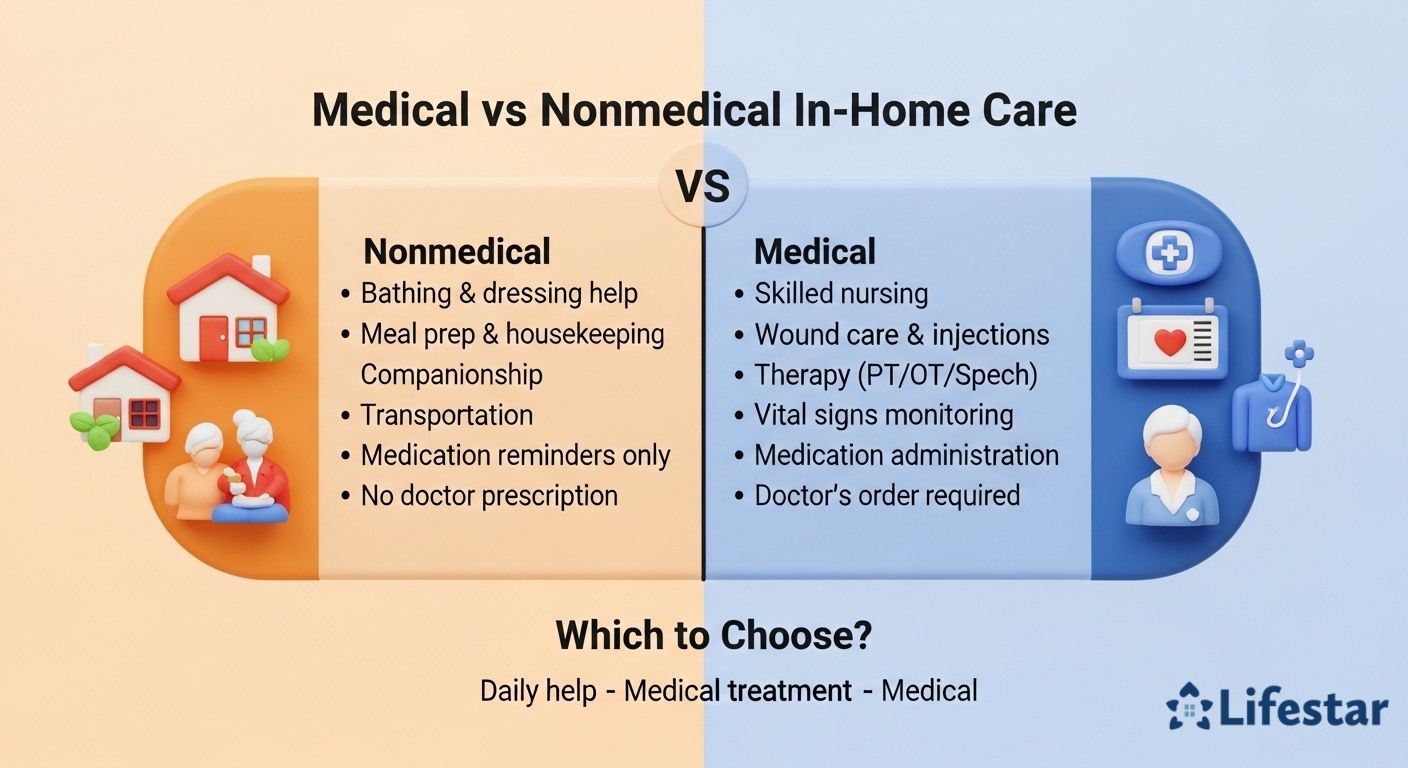
Common services provided by nonmedical caregivers include:
- Companionship – Engaging in conversation, reading, or playing games
- Personal care – Assistance with bathing, grooming, dressing, and toileting
- Household support – Light housekeeping, laundry, and meal preparation
- Transportation – Driving the client to appointments, social events, or errands
- Medication reminders – Prompting the client to take pills but not physically administering them
Common services provided by medical home health professionals include:
- Skilled nursing – Wound care, changing dressings, administering injections, and IV therapy
- Rehabilitation – Physical, occupational, and speech therapy
- Health monitoring – Checking vital signs, managing catheters, or monitoring medical equipment
- Medication administration – Dispensing medication and managing complex dosing schedules
For some families in central Oklahoma, caring for a senior loved one can be overwhelming at times. Luckily, they can rely on professional Oklahoma City respite care. Lifestar Home Care is a trusted name in respite and hourly care. Our caregivers are available around the clock to assist seniors with bathing, transportation, medication reminders, exercise, and much more, allowing families the time they need to focus on other important responsibilities or just take a break.
How Do Provider Qualifications and Training Compare?
Each type of care requires different levels of education, licensing, and clinical authority. The personnel who deliver these services have vastly different training and licensing requirements. Nonmedical care is provided by professional caregivers, home care aides, or personal care assistants (PCAs). While these individuals are trained in safety, privacy, and assisting with mobility, they’re not licensed medical professionals. Their expertise lies in soft skills, patience, and logistical support.
In contrast, medical in-home care is delivered by licensed healthcare professionals. This team typically includes registered nurses (RNs), licensed practical nurses (LPNs), physical therapists (PTs), and occupational therapists (OTs). These providers have undergone rigorous education and board certification to perform clinical tasks safely.
How Do Payment and Insurance Coverage Differ?
Insurance coverage often determines which type of care families choose. Financing is often the deciding factor for families trying to choose between these two options. Because medical in-home care is considered a clinical necessity, it’s frequently covered by Medicare, Medicaid, the Department of Veterans Affairs (VA), and private health insurance plans. However, strict eligibility requirements usually apply. For example, Medicare typically requires the senior to be housebound and have a skilled need certified by a doctor.
Nonmedical care is generally treated differently by insurance payers because it’s considered custodial rather than curative. Medicare and standard health insurance policies typically don’t cover nonmedical home care. Instead, families usually pay for these services out of pocket, through long-term care insurance policies, or, for those who qualify financially, through specific Medicaid waiver programs.
Frequently Asked Questions
What’s the difference between nonmedical home care and medical home care?
Nonmedical home care focuses on assistance with daily activities like meal preparation and companionship, while medical home care involves skilled nursing or therapy services provided by licensed professionals.
Who can benefit from nonmedical home care?
Nonmedical home care is ideal for individuals who need help with daily tasks but don’t require medical treatment, such as seniors or those with mobility challenges.
What services are included in medical home care?
Medical home care can include wound care, medication administration, physical therapy, and monitoring of chronic conditions, all provided by licensed healthcare professionals.
How do I decide between nonmedical and medical home care?
The choice depends on the individual’s needs. If your loved one requires medical treatment or monitoring, medical home care is appropriate. Otherwise, nonmedical care may suffice.
Can nonmedical and medical home care be combined?
Yes, many providers offer a combination of both services to address a wide range of needs and ensure comprehensive care.
Whether you need respite from your caregiving duties or your aging loved one needs Oklahoma City live-in care, Lifestar Home Care can meet your family’s care needs. Our dedicated caregivers are available around the clock to provide transportation to doctor’s appointments, ensure seniors take their prescribed medications, and help with a variety of tasks in and outside the home. To create a comprehensive in-home care plan for your loved one, call us today.