
Table of Content
- 1 Why Do Familiar Environments Matter for Seniors with Memory Loss?
- 2 How Does In-Home Care Boost Safety and Reduce Accident Risks?
- 3 How Does Personal Care Support Preserve Dignity as Dementia Progresses?
- 4 How Does In-Home Care Encourage Cognitive Stimulation and Connection?
- 5 How Does In-Home Care Provide Respite and Support for Family Caregivers?
- 6 Frequently Asked Questions
In-home care helps seniors with dementia or Alzheimer’s remain safe, stable, and supported in familiar surroundings. Professional caregivers provide supervision, personal care, cognitive engagement, and safety oversight while preserving routines that reduce confusion and emotional distress. This approach typically boosts cognitive health and supports both the senior and family caregivers.
Receiving an Alzheimer’s or dementia diagnosis marks the beginning of a challenging journey for seniors and their families. While the instinct is often to protect loved ones by keeping them close, the progressive nature of memory loss eventually requires professional support. In-home care bridges this gap, allowing seniors to age in place safely while receiving the specialized attention they need.
Why Do Familiar Environments Matter for Seniors with Memory Loss?
For individuals experiencing memory loss, familiar environments act as anchors. Moving to an assisted living facility or nursing home can often trigger “transfer trauma,” leading to increased confusion, agitation, and a faster decline in cognitive function.
In-home care allows seniors to remain among their own belongings and memories and maintain their established routines. This consistency is vital for emotional stability. Professional caregivers are trained to adapt to the senior’s specific schedule—whether that means breakfast at a certain time or an afternoon walk in the garden—rather than forcing the senior to adapt to a facility’s rigid timetable.
The type of home care Oklahoma City seniors need can vary. Some need assistance a few hours a day, while others require more extensive around-the-clock assistance. At Lifestar Home Care, we tailor our care plans based on each senior’s individual care needs, and the plans can be adjusted at any time. We are a trusted provider of respite and 24-hour care, and we also offer specialized Alzheimer’s, dementia, Parkinson’s, and stroke care for seniors.
How Does In-Home Care Boost Safety and Reduce Accident Risks?
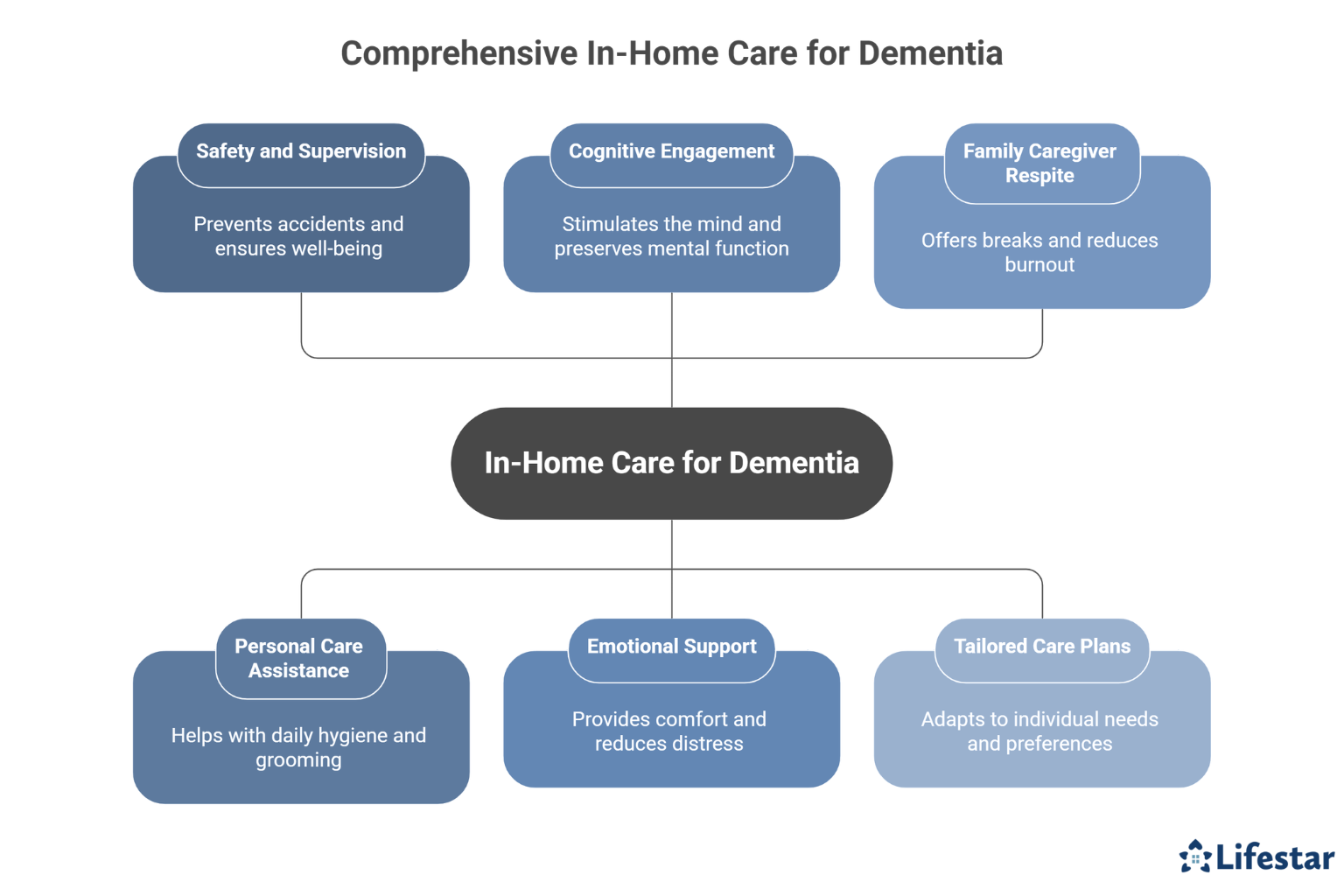
In-home care enhances safety by providing continuous supervision and customized risk prevention. Safety is typically the primary concern for families. As dementia progresses, judgment becomes impaired, increasing the risk of wandering, falls, and household accidents. A professional in-home caregiver provides a level of supervision that family members often cannot maintain 24/7.
Caregivers implement specific safety protocols tailored to the home environment:
- Wandering prevention – Monitoring exits and accompanying the senior during walks to prevent him or her from getting lost
- Fall risk reduction – Identifying trip hazards like throw rugs or clutter and assisting with mobility
- Appliance monitoring – Ensuring stoves and ovens are turned off and dangerous items are stored securely
- Emergency response – Being present to handle medical emergencies immediately should they arise
Caring for seniors with dementia can be challenging for family caregivers. Luckily, there is dementia care Oklahoma City families can rely on. Professional dementia caregivers help seniors with dementia stay safe and comfortable at home by preventing wandering, providing cognitive stimulation, and assisting with household chores.
How Does Personal Care Support Preserve Dignity as Dementia Progresses?
In-home care supports dignity by assisting with daily activities in a calm, respectful manner. As cognitive abilities decline, physical capabilities often follow. Tasks that were once automatic, such as bathing, dressing, grooming, and toileting, become difficult and frustrating. This loss of independence can lead to anxiety and aggressive behavior in dementia patients.
In-home caregivers approach these sensitive tasks with patience and respect for the senior’s dignity. They’re trained in techniques to encourage cooperation and reduce resistance, turning potentially stressful daily hygiene routines into calm, manageable activities. Furthermore, they ensure proper nutrition and hydration, which are often neglected by seniors with memory issues who may forget to eat or lose the ability to prepare meals.
How Does In-Home Care Encourage Cognitive Stimulation and Connection?
Consistent social engagement boosts cognitive health and reduces depression. Isolation is a significant risk factor for the rapid progression of dementia. Seniors who live alone or lack interaction may experience accelerated cognitive decline and depression. In-home care provides consistent social interaction that goes beyond mere supervision.
Caregivers engage clients in meaningful activities designed to stimulate the brain and evoke positive memories. These might include:
- Looking through old photo albums to encourage reminiscence therapy
- Listening to favorite music from the senior’s youth
- Playing simple card games or puzzles to exercise cognitive skills
- Engaging in conversation to maintain verbal abilities
How Does In-Home Care Provide Respite and Support for Family Caregivers?
In-home care reduces caregiver burnout by sharing the physical and emotional workload. Caring for a loved one with Alzheimer’s or dementia is physically and emotionally exhausting. Family caregivers report high rates of burnout, stress, and their own health complications. In-home care isn’t just a service for the client—it’s a lifeline for the family.
By bringing in a professional, family members can step back from the role of full-time caregiver and return to being a daughter, son, or spouse. Whether it’s help for a few hours a day or 24-hour live-in care, this support allows families to rest, work, and recharge, knowing their loved ones are in capable hands. This balance is essential for maintaining a healthy dynamic within the home for the long term.
Frequently Asked Questions
Does in-home care slow dementia progression?
Sometimes. While it doesn’t stop the disease, consistent routines and cognitive engagement generally reduce rapid decline.
Can dementia patients safely remain at home with in-home care?
Yes. With proper supervision, safety modifications, and trained caregivers, most dementia patients can safely age in place through moderate stages of the disease.
Do caregivers receive dementia-specific training?
Yes. Professional in-home caregivers are typically trained to manage behavioral changes and cognitive decline safely.
Is in-home care flexible as symptoms worsen?
Yes. Care plans are usually adjusted over time to match changing cognitive and physical needs.
Certain age-related conditions can make it more challenging for seniors to age in place safely and comfortably, but Oklahoma City live-in care experts are available around the clock to help seniors manage their health. Whether your loved one is living with Alzheimer’s or dementia or recovering from a stroke, you can trust the professional caregivers from Lifestar Home Care to enhance his or her quality of life. To hire a professionally trained caregiver for your loved one, call us today.