
Restoring natural sleep rhythms in dementia care involves aligning environmental and behavioral cues to rebuild healthy sleep architecture, which drastically enhances daily functioning and mood. By understanding how cognitive decline disrupts normal sleep cycles, caregivers can implement structured routines that promote restful nights. This targeted approach helps individuals achieve the restorative rest necessary for optimal emotional and mental wellbeing.
What Is Sleep Architecture?
Sleep architecture refers to the structural organization of normal sleep, which is divided into a sequence of specific stages. These stages include light sleep, deep restorative sleep, and rapid eye movement (REM) sleep. A healthy internal clock naturally loops through these phases several times a night, allowing the brain to effectively process information, consolidate memories, and recharge for the following day.
How Does Dementia Affect Sleep Cycles?
Dementia directly alters the brain regions responsible for regulating circadian rhythms, leading to highly fragmented sleep patterns. Individuals often experience significant decreases in deep sleep and REM sleep, causing frequent nighttime awakenings and overall restlessness. This neurological shift frequently leads to a reversal of day-night cycles, where individuals sleep for long periods during the daytime and remain awake and active at night.
Why Are Natural Rhythms Important for Dementia Care?
Maintaining natural sleep rhythms is crucial for minimizing behavioral challenges like late-day confusion and agitation, commonly known as sundowning. Consistent high-quality rest enhances daytime alertness, making daily routines much smoother, safer, and easier to navigate for everyone involved. Furthermore, when individuals experience adequate deep sleep, they generally display much better emotional regulation and significantly fewer signs of distress.
Certain age-related conditions can make it more challenging for seniors to age in place safely and comfortably, but Oklahoma City 24-hour care experts are available around the clock to help seniors manage their health. Whether your loved one is living with dementia or recovering from a stroke, you can trust the professional caregivers from Lifestar Home Care to enhance his or her quality of life.
What Strategies Can Restore Healthy Rest?
Caregivers can leverage daily habits and environmental modifications to naturally reset the body’s internal clock without relying on artificial interventions.
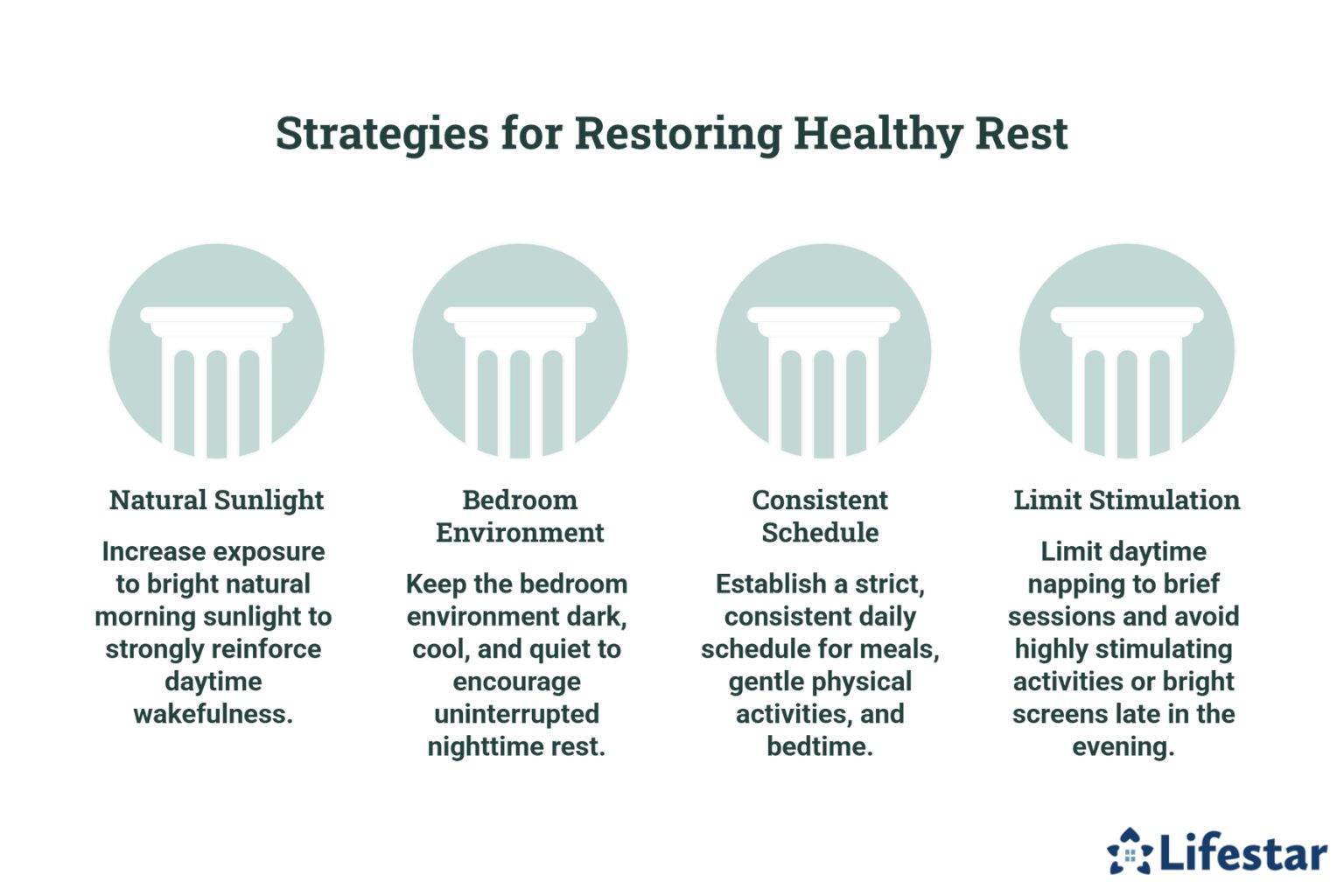
- Increase exposure to bright natural morning sunlight to strongly reinforce daytime wakefulness.
- Keep the bedroom environment dark, cool, and quiet to encourage uninterrupted nighttime rest.
- Establish a strict, consistent daily schedule for meals, gentle physical activities, and bedtime.
- Limit daytime napping to brief sessions and avoid highly stimulating activities or bright screens late in the evening.
Caring for a loved one with dementia can be challenging, but compassionate help is available. If your senior loved one has been diagnosed with a serious condition and needs help with tasks like meal prep, transportation, medication reminders, bathing, and grooming, reach out to Lifestar Home Care, a leading provider of home care Oklahoma City families can trust. We also offer comprehensive care for seniors with dementia, Alzheimer’s, and Parkinson’s.
Caring for seniors with dementia can be challenging for family caregivers. Luckily, exceptional Oklahoma City dementia care is available for family caregivers who are at risk for burnout. Professional dementia caregivers help seniors with dementia stay safe and comfortable at home by preventing wandering, providing cognitive stimulation, and assisting with household chores. Trust your loved one’s care to the professionals at Lifestar Home Care. To create a customized home care plan for your loved one, call us today.
Frequently Asked Questions
How much sleep does someone with dementia need?
+
Most adults require seven to nine hours of sleep per night, though cognitive changes often cause this rest to be broken into shorter fragmented intervals. Focusing on enhancing the quality and consistency of nighttime sleep is the most important goal.
Can lighting really affect sleep patterns?
+
Yes, environmental light is the absolute strongest signal for regulating the body’s internal clock. Bright daylight in the early morning and very dim lighting at night naturally cue the brain for proper wakefulness and sleep.
Should daytime naps be completely avoided?
+
While short rest periods can be refreshing, long daytime naps severely interfere with the natural drive for nighttime sleep. It’s best to limit napping to under thirty minutes during the early afternoon.
What causes nighttime wandering in dementia?
+
Nighttime wandering is often triggered by disrupted sleep architecture and a profound loss of standard circadian cues. Restoring a highly predictable daily routine can naturally reduce this nighttime restlessness.