
Table of Content
- 1 Understanding Spiritual Care for Elderly Adults at Home
- 2 What Are the Spiritual Needs of the Elderly?
- 3 How Spiritual Care for Seniors Increases Emotional Stability
- 4 Spiritual Elder Care Integrated into Daily Home Routines
- 5 How Home Care Providers Support the Spiritual Needs of Clients
- 6 Spiritual Care for Seniors with Cognitive Decline
- 7 Continuous Support and Spiritual Comfort at Home
- 8 How Holistic Wellness Is Incorporated into Home Care Programs
- 9 Key Benefits of Spiritual Senior Care Community Support
- 10 Spiritual Care at Home vs. Residential Settings
- 11 Faith-Based and Community-Oriented Spiritual Support
- 12 Frequently Asked Questions
Aging often brings deeper reflection, emotional sensitivity, and a stronger desire for purpose and peace. In their later years, seniors look beyond physical comfort and focus more on meaning, connection, and inner calm. Addressing these deeper elements helps older adults feel valued and understood while aging in familiar surroundings.
Understanding Spiritual Care for Elderly Adults at Home
Families choosing home care are increasingly aware that care must support emotional and spiritual wellbeing along with daily needs. Spiritual home care focuses on respecting beliefs, personal values, life experiences, and faith traditions. This approach allows seniors to maintain identity and dignity while receiving assistance in a place where they feel safe and comfortable.
What Are the Spiritual Needs of the Elderly?
The spiritual needs of elderly individuals often include reflection, peace, hope, forgiveness, gratitude, and connection. Many seniors seek reassurance during life transitions, health changes, or loss of independence. Understanding the spiritual needs of the elderly helps caregivers respond with empathy, patience, and respect, creating a supportive environment that nurtures emotional resilience and calm.
How Spiritual Care for Seniors Increases Emotional Stability
Spiritual care for seniors plays a powerful role in emotional health. Seniors who feel spiritually supported often experience lower anxiety, better mood, and stronger coping skills. Gentle conversation, listening without judgment, honoring rituals, or spending quiet moments together reduces loneliness and fear, especially for those living alone or managing chronic conditions.
Spiritual Elder Care Integrated into Daily Home Routines
Spiritual elder care doesn’t always involve formal religious practices. It may include reflection, music, storytelling, prayer, meditation, or time outdoors. Activities such as spiritual eldercare in the garden allow seniors to reconnect with nature, fostering peace and mindfulness. These moments fit naturally into daily routines and promote holistic wellness.
How Home Care Providers Support the Spiritual Needs of Clients
Flexible support models allow caregivers to focus on emotional and spiritual needs during each visit. With hourly home care, caregivers can dedicate time to meaningful engagement, companionship, or spiritual reflection. This personalized approach strengthens trust and ensures spiritual preferences are respected without overwhelming the senior.
Spiritual Care for Seniors with Cognitive Decline
For individuals receiving dementia care, familiar spiritual practices can be especially comforting. Songs, prayers, or rituals often remain meaningful even as memory fades. Elder spiritual care can reduce agitation, increase emotional security, and provide a sense of continuity during cognitive changes.
Continuous Support and Spiritual Comfort at Home
When seniors need consistent supervision, 24-hour care allows spiritual support to be available at all times. Nighttime anxiety or emotional distress can be eased through calm reassurance, familiar spiritual routines, or quiet companionship. This level of care creates stability and peace around the clock.
How Holistic Wellness Is Incorporated into Home Care Programs
Modern care models focus on mind, body, and spirit together. Understanding how holistic wellness is incorporated into home care programs ensures seniors receive balanced support. Physical assistance, emotional companionship, and spiritual encouragement work together to boost overall quality of life while aging in place.
Key Benefits of Spiritual Senior Care Community Support
- Encourages emotional balance and inner peace
- Supports faith, reflection, and personal value
- Reduces loneliness and anxiety
- Strengthens caregiver–senior trust
- Enhances dignity and life satisfaction
Spiritual Care at Home vs. Residential Settings
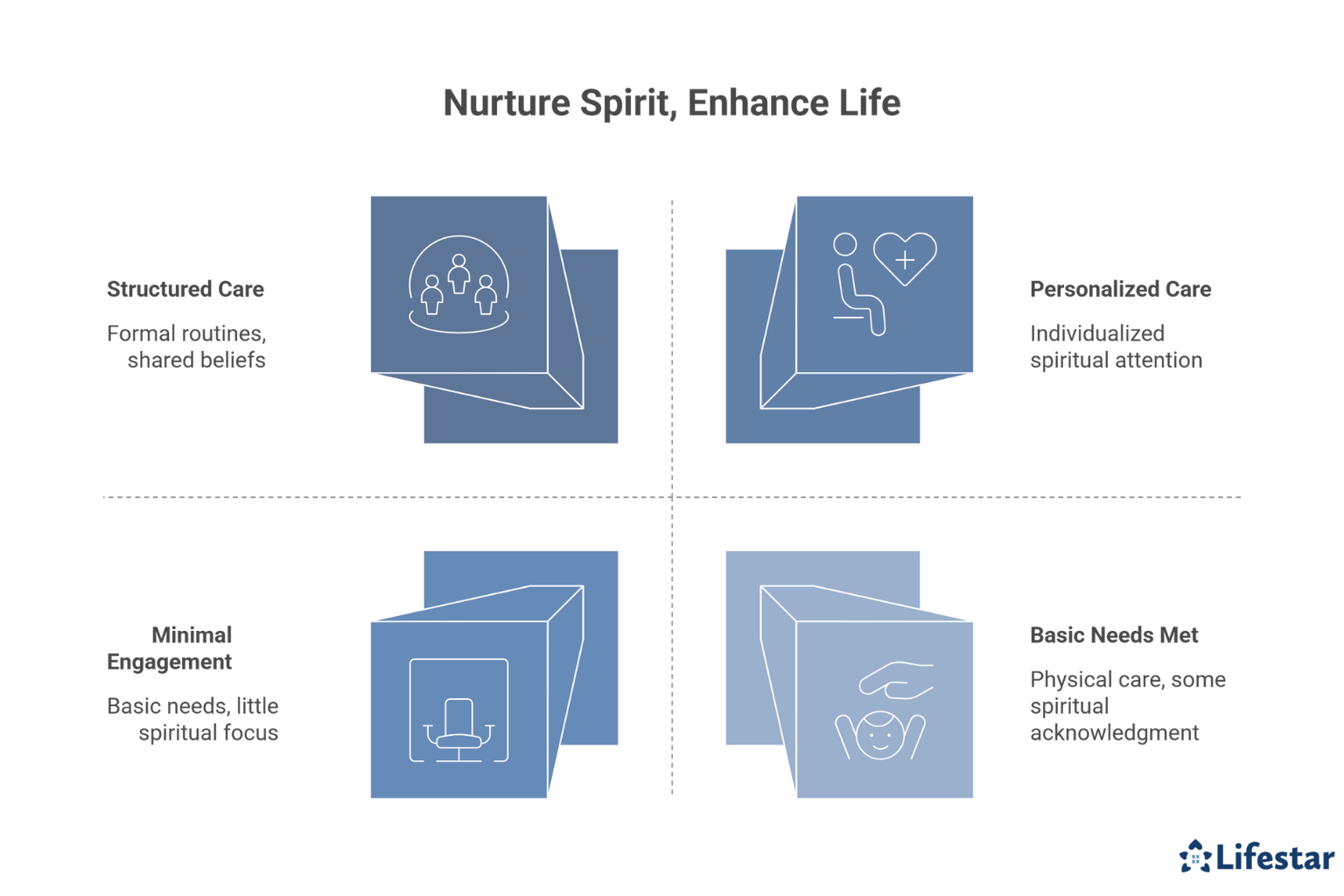
Many families compare home-based care with residential options. The spiritual needs of the elderly living in residential or nursing homes may be harder to personalize due to structured routines. At-home care allows individualized attention, making it easier to honor beliefs, traditions, and spiritual preferences consistently.
| Care Environment | Spiritual Support Level |
| Home Care | Highly personalized |
| Assisted Living | Moderately structured |
| Nursing Homes | Limited personalization |
| Faith-Based Communities | Shared belief support |
Faith-Based and Community-Oriented Spiritual Support
Some families prefer faith-based senior care, style models that integrate belief systems into daily care. A spiritual senior care community approach emphasizes compassion, respect, and purpose while allowing seniors to remain connected to their values and traditions.
Frequently Asked Questions
What is spiritual care for elderly individuals?
+
Spiritual care supports emotional, faith-based, and personal values to help seniors feel peaceful and connected.
How is spiritual care integrated into home care environments?+
It’s integrated through respectful listening, honoring rituals, emotional support, and meaningful engagement.
How can assisted living facilities support residents’ spiritual needs?+
Facilities can offer quiet spaces, faith services, and culturally sensitive practices, though personalization is limited.
How do home care providers support spiritual needs of clients?+
They provide individualized attention, companionship, and respect for beliefs within daily routines.
Is spiritual care religious only?+
No. Spiritual care includes reflection, purpose, values, and emotional connection, with or without religion.