
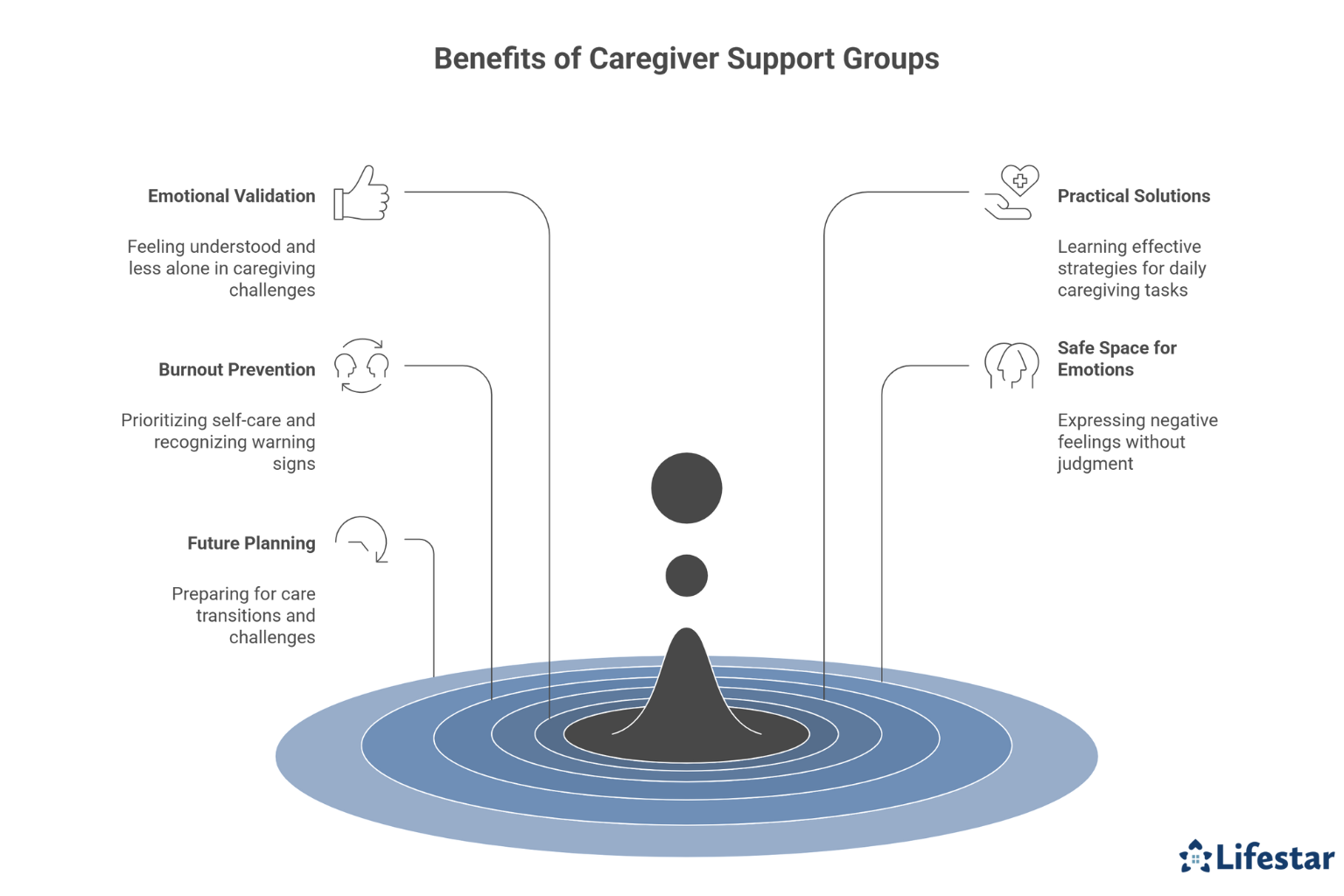
Caregiver support groups provide essential emotional validation, practical caregiving advice, and burnout prevention strategies by connecting you with others who understand your experience. These groups create a judgment-free space to share feelings, exchange solutions for daily challenges, and gain insight into future care transitions from members at different stages of the caregiving journey.
Caring for a senior loved one is a labor of love, but it can often leave you feeling exhausted, overwhelmed, and surprisingly isolated. Joining a caregiver support group offers a vital lifeline, connecting you with a community that understands your journey and providing the tools you need to navigate it successfully.
Why Is Emotional Validation So Important for Caregivers?
One of the most immediate benefits of a support group is the realization that you’re not alone. Caregiving often happens behind closed doors, leading to a distorted sense of reality where you feel like the only person facing specific challenges. When you enter a room (or a Zoom call) full of people nodding in agreement as you describe your day, the relief is palpable.
This emotional validation serves as a powerful antidote to isolation. You realize your feelings of frustration, guilt, or sadness aren’t unique personal failings but normal reactions to a demanding situation. Hearing others say “I felt that way too” normalizes your experience. This shared understanding fosters a deep sense of belonging that’s difficult to find elsewhere, even among well-meaning friends or family members who haven’t walked in your shoes.
What Practical Caregiving Solutions Can You Learn from Group Members?
While emotional support is crucial, caregiving also requires a complex set of logistical skills. Support groups are essentially master classes in navigating the healthcare and social service systems. Members often share hard-won knowledge you won’t find in a medical pamphlet.
Participants frequently exchange information on:
- Navigating insurance claims – Tips on how to handle denials or complex paperwork
- Local resources – Recommendations for adult day care centers, respite care services, or transportation assistance
- Medical providers – Honest reviews of doctors, specialists, and home caregivers in your area
- Adaptive strategies – Creative solutions for daily tasks, such as bathing, feeding, or managing mobility issues
Instead of spending hours researching solutions online, you can often get an immediate answer from someone who solved that exact problem last week. This collective wisdom saves you time and energy, two resources that are often in short supply for caregivers.
Other family caregivers can also offer sound advice about hiring a professional caregiver. The type of home care Oklahoma City seniors need can vary. Some need assistance a few hours a day, while others require more extensive around-the-clock assistance. At Lifestar Home Care, we tailor our care plans based on each senior’s individual care needs, and the plans can be adjusted at any time. We are a trusted provider of respite and 24-hour care, and we also offer specialized Alzheimer’s, dementia, Parkinson’s, and stroke care for seniors.
How Do Support Groups Prevent Caregiver Burnout?
Burnout is a genuine medical risk for caregivers, characterized by physical, emotional, and mental exhaustion. Support groups act as a preventative measure by emphasizing the importance of self-care. In these meetings, you’re frequently reminded that taking care of yourself isn’t an act of selfishness but a necessity.
Seeing other caregivers prioritize their health encourages you to do the same. The group acts as an accountability partner. If you mention you haven’t been to the doctor in two years, your peers will likely urge you to make an appointment. Furthermore, these groups help you recognize the early warning signs of burnout, such as irritability or sleep disturbances, allowing you to address them before they escalate into a crisis. By reducing stress levels through shared burden bearing, you become better equipped to handle the demands of caregiving over the long term.
Family caregivers need to care for their own wellbeing. If you’re caring for an aging loved one and are feeling overwhelmed, consider hiring a professional caregiver to provide Oklahoma City respite care. Families who want to prevent burnout can turn to Lifestar Home Care. One of our professional caregivers can assist your loved one at home while you take a nap, go to work, run errands, or go on vacation.
Why Is It Safe to Express Negative Emotions in Support Groups?
Society often imposes a narrative that caregiving should be entirely noble and fulfilling. This creates a “toxic positivity” trap where caregivers feel guilty for experiencing negative emotions like anger, resentment, or boredom. A support group provides a judgment-free zone where you can be brutally honest about the harder parts of your role.
In this safe space, you can admit you’re tired of the repetitive questions caused by dementia or that you miss your old life. Expressing these darker emotions releases the pressure valve. Once you vocalize these feelings without fear of criticism, they often lose their power over you. The group understands loving someone and being frustrated by the burden of care aren’t mutually exclusive concepts—they can, and often do, exist simultaneously.
How Can Support Groups Help You Prepare For Future Care Transitions?
Caregiving is rarely a static situation. Illnesses progress and needs change. Being part of a support group allows you to see what lies ahead by interacting with caregivers who are at different stages of the journey.
This “anticipatory guidance” helps you prepare emotionally and logistically for future transitions, such as moving a loved one to a facility or handling end-of-life care. Instead of being blindsided by new symptoms or challenges, you have a road map provided by those who have already traveled that path. This foresight reduces anxiety about the unknown and helps you make more informed decisions when crises inevitably arise.
Frequently Asked Questions
Do I need to attend every support group meeting?
No, attend as your schedule allows. Most groups welcome drop-ins and understand caregiving demands fluctuate, making regular attendance difficult for many members.
Are caregiver support groups only for spouses and adult children?
No, groups welcome anyone in a caregiving role. Many include distant relatives, friends, neighbors, and professional caregivers who need peer support.
Can I join a support group if my loved one is in a facility?
Yes, transitioning a loved one to assisted living or nursing care creates unique emotional challenges. Many groups specifically include facility-based caregivers.
How do I find a support group that matches my situation?
Start with disease-specific organizations like the Alzheimer’s Association, or ask your loved one’s doctor for local recommendations tailored to your specific caregiving situation.
Yes, reputable support groups operate under strict confidentiality agreements. What’s shared in the group stays in the group to create a safe environment.
If you’re feeling isolated and overwhelmed by your caregiving responsibilities, a professional caregiver can be a wonderful source of encouragement. Whether you need respite from your caregiving duties or your aging loved one needs Oklahoma City live-in care, Lifestar Home Care can meet your family’s care needs. Our dedicated caregivers are available around the clock to provide transportation to doctor’s appointments, ensure seniors take their prescribed medications, and help with a variety of tasks in and outside the home. Call Lifestar Home Care today to learn about our high-quality in-home care services.