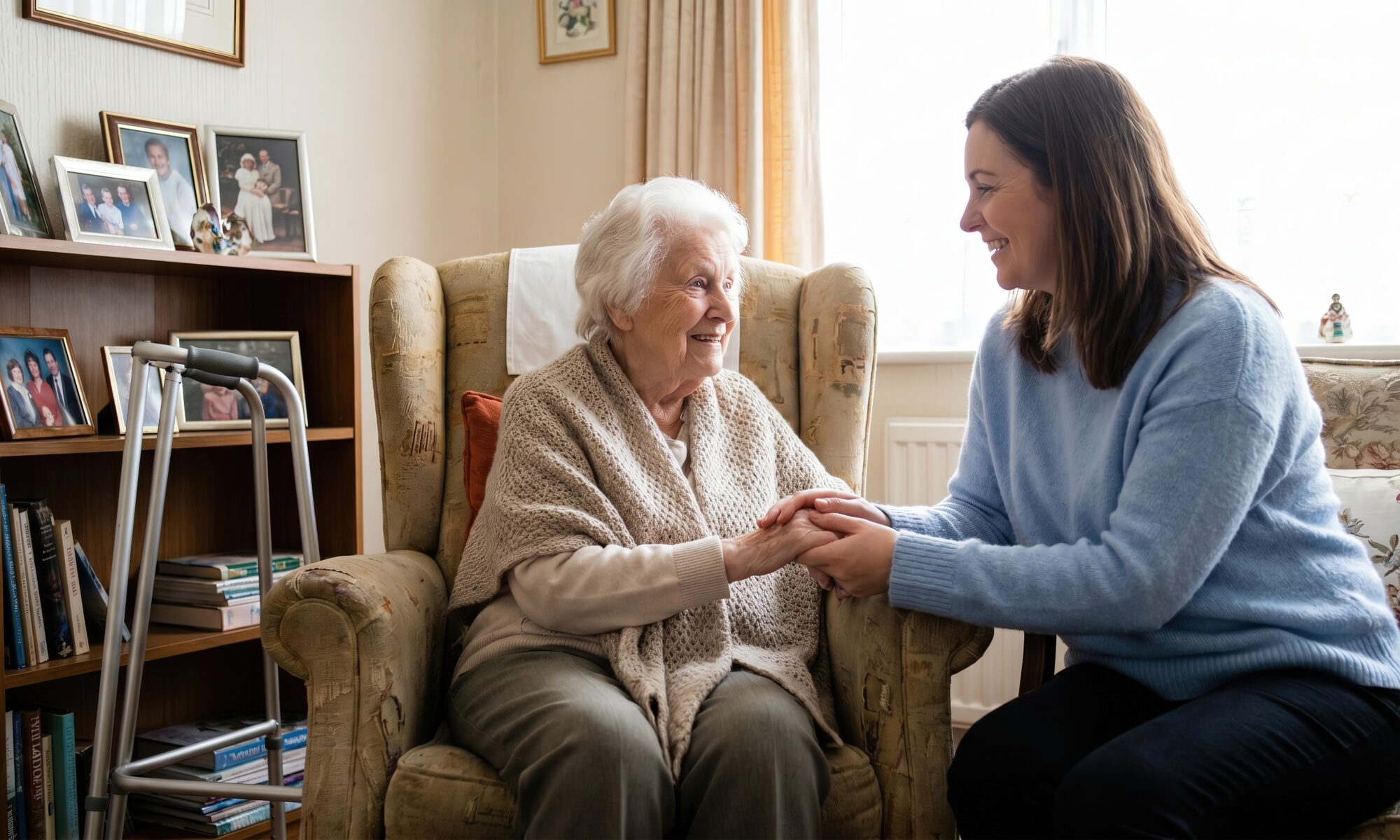
Enhancing quality of life in senior in-home care means addressing emotional, social, physical, and daily living needs in a familiar home environment. With the right support and routines in place, seniors can experience greater comfort, independence, and wellbeing without leaving their homes.
Senior in-home care offers a meaningful alternative to assisted living facilities, allowing older adults to age with dignity in a place they know and love. The right care approach goes far beyond basic assistance. It actively supports the whole person.
How Does Emotional Wellbeing Affect Seniors Receiving In-Home Care?
Emotional health is a cornerstone of quality of life for seniors at home.
- Regular meaningful conversation with caregivers reduces feelings of isolation and loneliness.
- Encouraging seniors to share stories, memories, and opinions preserves their sense of identity.
- Acknowledging emotions with empathy rather than dismissing concerns builds trust and reduces anxiety.
- Gentle check-ins about mood and mental state allow caregivers to identify early signs of depression.
Many seniors prefer aging in place over moving to assisted living facilities. If your senior loved one needs assistance to remain safe and comfortable while living at home, reach out to Lifestar Home Care, a leading provider of home care Oklahoma City families can rely on. Our dedicated in-home caregivers can assist with meal prep, bathing and grooming, exercise, medication reminders, and many other important tasks.
What Role Does Social Engagement Play in Senior In-Home Care?
Staying socially connected has a direct impact on cognitive and emotional health in older adults.
- Caregivers can facilitate regular video or phone calls with family and friends.
- Accompanying seniors to community events, religious services, or hobby groups supports a sense of belonging.
- Simple activities like playing cards, doing puzzles, or watching a favorite show together can be deeply meaningful.
- Where appropriate, pet companionship is another proven way to boost mood and reduce stress.
When their aging loved ones need companionship and socialization a few hours a week or just need minor assistance with daily household tasks, Oklahoma City overnight home care or respite care can be a wonderful solution. At Lifestar Home Care, we thrive on helping seniors maintain their independence while living in the comfort of home.
How Can Physical Activity Be Safely Incorporated into In-Home Senior Care?
Gentle movement supports mobility, balance, and overall physical health for seniors living at home.
- Chair-based stretching and light exercises can be adapted for varying ability levels.
- Short daily walks—even around the home or yard—help seniors maintain strength and circulation.
- Caregivers can encourage participation in senior-focused programs like tai chi or yoga available via streaming services.
- Always tailor physical activity to your loved one’s comfort level, avoiding anything that risks injury.
How Does a Structured Daily Routine Enhance Quality of Life for Seniors at Home?
Consistency and predictability reduce confusion and stress, particularly for seniors with cognitive decline.
- A regular schedule for meals, activities, and rest creates a sense of normalcy and control.
- Familiar rituals—morning coffee, an afternoon walk, an evening television program—provide comfort and structure.
- Build routines around your loved one’s preferences, not just logistical convenience.
- Flexibility within structure is key: some days will look different, and that’s okay.
What Environmental Adjustments Help Seniors Thrive in Their Own Homes?
A safe, comfortable, and personalized home environment directly supports wellbeing.
- Remove tripping hazards like loose rugs, clutter, and poor lighting to prevent falls.
- Arrange frequently used items within easy reach to support independence.
- Incorporate personal touches—family photos, favorite décor, and meaningful objects—to nurture a sense of home.
- Ensure comfortable seating, adequate lighting, and temperature control for daily comfort.
Some seniors only require help with a few daily tasks so they can maintain their independence. However, those living with serious illnesses may need more extensive assistance. Luckily, there is high-quality professional 24-hour home care for Oklahoma City seniors. Home can be a safer and more comfortable place for your loved one to live with the help of an expertly trained and dedicated around-the-clock caregiver. Lifestar Home Care will work with you to customize a care plan that’s just right for your loved one’s needs. Call one of our friendly Care Managers today to learn more about our customized care plan
Frequently Asked Questions
What’s the most important factor in enhancing quality of life for seniors receiving in-home care?
+
Human connection is often cited as the most critical factor. Seniors who feel heard, respected, and genuinely engaged by their caregivers tend to experience significantly better emotional and physical outcomes.
How can family members provide high-quality in-home care from a distance?
+
Regular check-ins via phone or video call make a meaningful difference, as does maintaining open communication with the caregiver about your loved one’s changing needs and preferences.
What activities are best for seniors with limited mobility in a home care setting?
+
Low-impact activities like reading, listening to music, light stretching, and creative hobbies such as drawing or knitting are well suited to seniors with limited mobility and can be done comfortably at home.
How do caregivers balance senior independence with necessary support?
+
Effective caregivers offer assistance only where it’s truly needed, encouraging seniors to do as much as they comfortably can on their own. This preserves dignity and supports a stronger sense of self-sufficiency.
How often should a senior’s in-home care plan be reviewed and updated?
+
Care plans should be reviewed regularly—at minimum, every few months or whenever there’s a noticeable change in your loved one’s physical condition, emotional state, or daily living needs.