Table of Content
Caregiving is one of the most compassionate and rewarding roles a person can take on, but it also comes with its challenges. Empathy and effectiveness go hand in hand when providing care, ensuring your senior loved one’s emotional and physical needs are met with genuine understanding and respect. Let’s explore how to cultivate these traits and improve as a caregiver.
Prioritize Active Listening
Being an empathetic caregiver starts with active listening. When you truly listen to your loved one, you show that his or her feelings and concerns matter. Here’s how to practice active listening effectively:
- Give your full attention – Put away distractions like your phone or other tasks when your loved one is speaking to you.
- Show acknowledgment – Use nods, eye contact, and affirming words like “I see” or “That sounds tough.”
- Resist the urge to interrupt – Allow your loved one to fully express his or her thoughts before you respond. If your loved one feels heard and understood, your relationship will naturally strengthen.
By truly listening, you create an environment where your loved one feels safe to share his or her needs, concerns, and feelings, helping you provide care more effectively.
At-home care professionals can be a wonderful boon to seniors. Whether they require around-the-clock supervision or just need assistance with exercise and household tasks a few days a week, seniors can enjoy a higher quality of life with the help of trusted in-home caregivers.
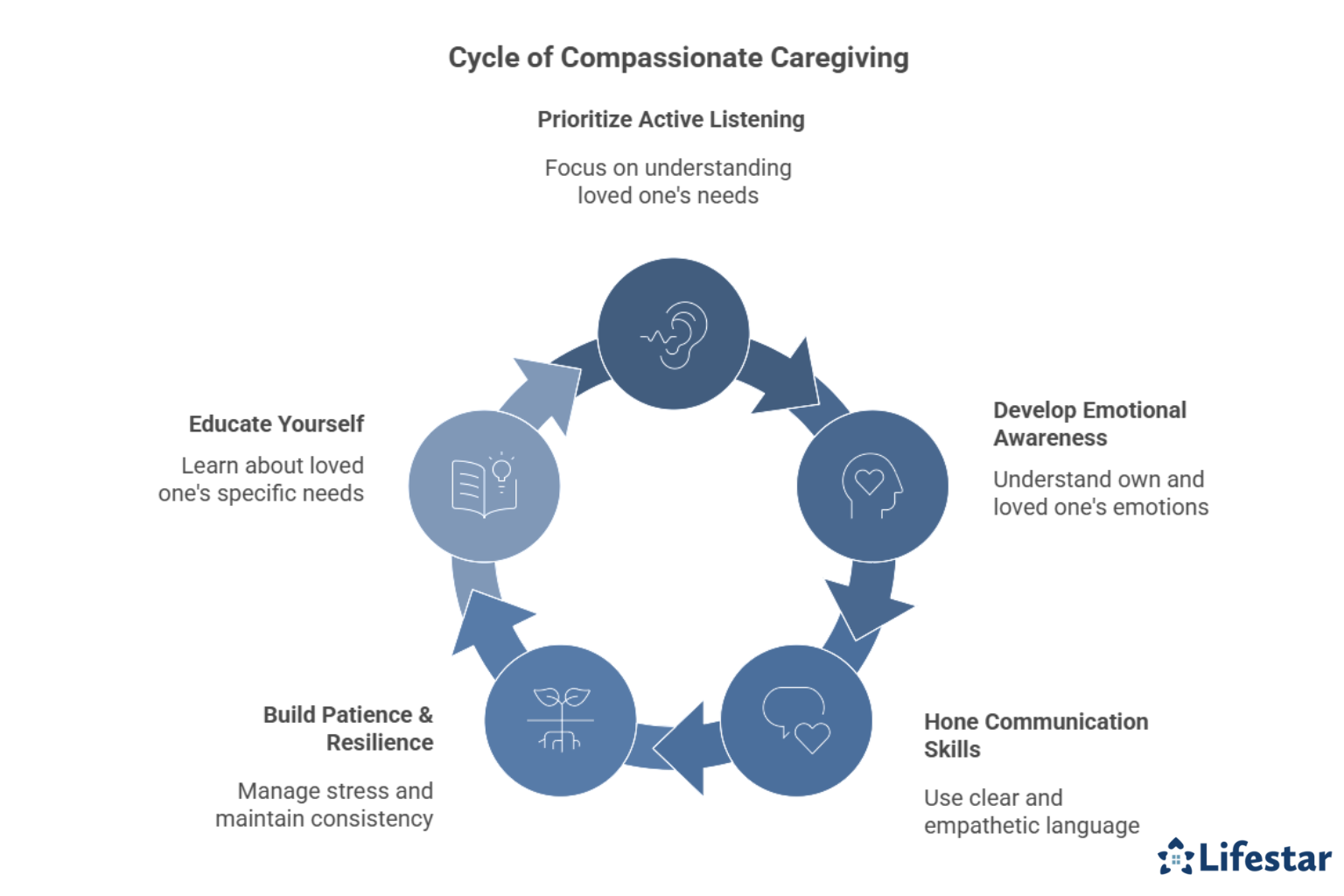
Develop Emotional Awareness
Empathy requires a deep understanding of not just others’ emotions but your own as well. Emotional awareness helps you connect with your loved one while managing your own wellbeing. Here’s how you can foster emotional awareness:
- Recognize triggers – Things that trigger you might lead to frustration or burnout. Journaling can help you identify patterns or situations that challenge your emotions.
- Practice self-regulation – When faced with stress, take a moment to breathe deeply or step away briefly before responding. This ensures your reactions are measured and kind.
- Tune in to your loved one’s emotions – Notice nonverbal cues like facial expressions or body language to better understand how your loved one feels, even if he or she doesn’t verbalize it.
When you’re aware of your own emotions and can recognize those of others, you become a more understanding and intuitive caregiver.
Hone Your Communication Skills
Clear and compassionate communication is vital for effective caregiving. Miscommunication can lead to confusion, frustration, and missed opportunities to meet important needs. To communicate effectively:
- Simplify your messages – Use clear language, avoiding jargon or overly complex explanations, especially if your loved one has cognitive or language difficulties.
- Empathize in words – Use phrases like “That must be difficult for you” or “I’m here to help however I can.”
- Encourage open dialogue – Create an atmosphere where questions and concerns are welcomed. If your loved one feels comfortable communicating with you regularly, you’ll better understand how to support him or her.
Strong communication reduces misunderstandings and strengthens the bond between you and your loved one.
Build Patience & Resilience
Empathy often goes hand in hand with patience, especially when caring for someone with ongoing or unpredictable needs. It’s important to develop resilience to protect both your mental health and the quality of care you provide. Consider these strategies:
- Pause before reacting – When something feels frustrating or overwhelming, take a moment to think about your response rather than reacting instinctively.
- Establish realistic expectations – Understand that progress doesn’t always happen immediately. Focus on the small wins and daily efforts.
- Engage in self-care – Resilience stems from a healthy mind and body. Schedule time for rest, hobbies, or even short mindfulness exercises to recharge.
Caregiving can be physically and emotionally exhausting, but developing patience and resilience ensures consistency in your compassion and performance.
Family caregivers need to care for their own wellbeing. If you’re caring for an aging loved one and are feeling overwhelmed, consider hiring a professional caregiver to provide hourly care. Oklahoma City families who want to prevent burnout can turn to Lifestar Home Care. One of our professional caregivers can assist your loved one at home while you take a nap, go to work, run errands, or go on vacation.
Educate Yourself about Your Loved One’s Needs
A more effective caregiver is one who is well informed and equipped to meet the specific needs of the person he or she is assisting. Knowledge is a powerful tool to enhance not just your effectiveness but also your empathy. Here’s how to educate yourself:
- Understand your loved one’s health condition – Whether it’s a chronic illness, disability, or aging-related issues, research the specific needs and challenges. Organizations, online resources, or support groups can be excellent sources of information.
- Learn about proper care techniques – If caregiving tasks include mobility assistance, medication organization, or dietary considerations, make sure you’re trained in best practices for handling these responsibilities.
- Ask professionals for guidance – Don’t hesitate to consult healthcare providers or specialists for insights on how to improve the care you give.
When you understand your loved one’s challenges and needs, it becomes easier to empathize with his or her situation and provide tailored support.
If you’re the primary caregiver for a senior family member and are looking for professional home care, Oklahoma City Lifestar Home Care should be your top choice. Our dedicated and compassionate caregivers are committed to helping older adults manage their health and enjoy a higher quality of life in the golden years. For more information about our flexible, customizable home care plans, call one of our compassionate Care Managers today.