
Table of Content
- 1 Early Signs that May Appear Before Diagnosis
- 2 Motor Symptoms that Affect Movement and Control
- 3 Non-Motor Symptoms Often Overlooked
- 4 Cognitive and Emotional Changes Over Time
- 5 How Symptoms Progress With Disease Stages
- 6 Parkinson’s Symptom Progression Overview
- 7 Daily Challenges Faced by Individuals with Parkinson’s
- 8 Supporting Independence While Ensuring Safety
- 9 How Home Care Service Helps in Managing Parkinson’s Symptoms
- 10 When to Seek Additional Support
- 11 Parkinson’s Care Awareness with Lifestar Home Care in Oklahoma City
- 12 Frequently Asked Questions
Parkinson’s disease symptoms often begin subtly and progress gradually, affecting movement, balance, coordination, and non-motor body functions over time. Many people first notice small physical changes or internal sensations before clear motor signs appear. Recognizing early and advanced symptoms can help families seek timely medical guidance and plan appropriate daily support.
Early Signs that May Appear Before Diagnosis
In the early stage, Parkinson’s disease may not be obvious. Symptoms can be mild and sometimes mistaken for normal aging. These early changes often appear on one side of the body and progress slowly. Many families notice posture changes, reduced facial expressions, or a softer speaking voice. Handwriting may become smaller, and simple daily tasks can take longer than before. As daily routines become harder to manage independently, home care can provide structured assistance while allowing individuals to remain comfortable at home. Early support often helps seniors maintain independence and emotional wellbeing during the adjustment phase.
Motor Symptoms that Affect Movement and Control
Motor symptoms are the most recognized signs of Parkinson’s disease. These changes impact how the body moves and responds during daily activities.
Common motor-related symptoms include:
- Tremors that usually begin in the hands or fingers
- Muscle stiffness that limits flexibility
- Slowed movement making routine tasks more time-consuming
- Balance difficulties that increase fall risk
As mobility becomes unpredictable, some individuals require supervision throughout the day and night. In advanced stages, 24-hour care ensures continuous safety, assistance with movement, and prompt response to emergencies, especially for individuals at high fall risk.
Non-Motor Symptoms Often Overlooked
Parkinson’s disease isn’t limited to movement challenges. Non-motor symptoms can significantly affect quality of life and often appear years before motor symptoms. These may include sleep disturbances, digestive issues, fatigue, mood changes, and anxiety. Cognitive slowing or difficulty focusing may also occur. Over time, individuals may have difficulty with daily routines that once felt simple. When symptoms fluctuate during the day, hourly home care allows families to schedule support during the most challenging periods without committing to full-time care.
Cognitive and Emotional Changes Over Time
As Parkinson’s progresses, some individuals experience memory challenges, confusion, or difficulty with decision-making. Emotional changes such as depression, apathy, or irritability are also common and can be distressing for both seniors and caregivers. In the later stages, cognitive decline may overlap with memory-related conditions. When thinking and reasoning become more affected, dementia care can focus on structured routines, safety supervision, and emotional reassurance, helping individuals maintain dignity and comfort within familiar surroundings.
How Symptoms Progress With Disease Stages
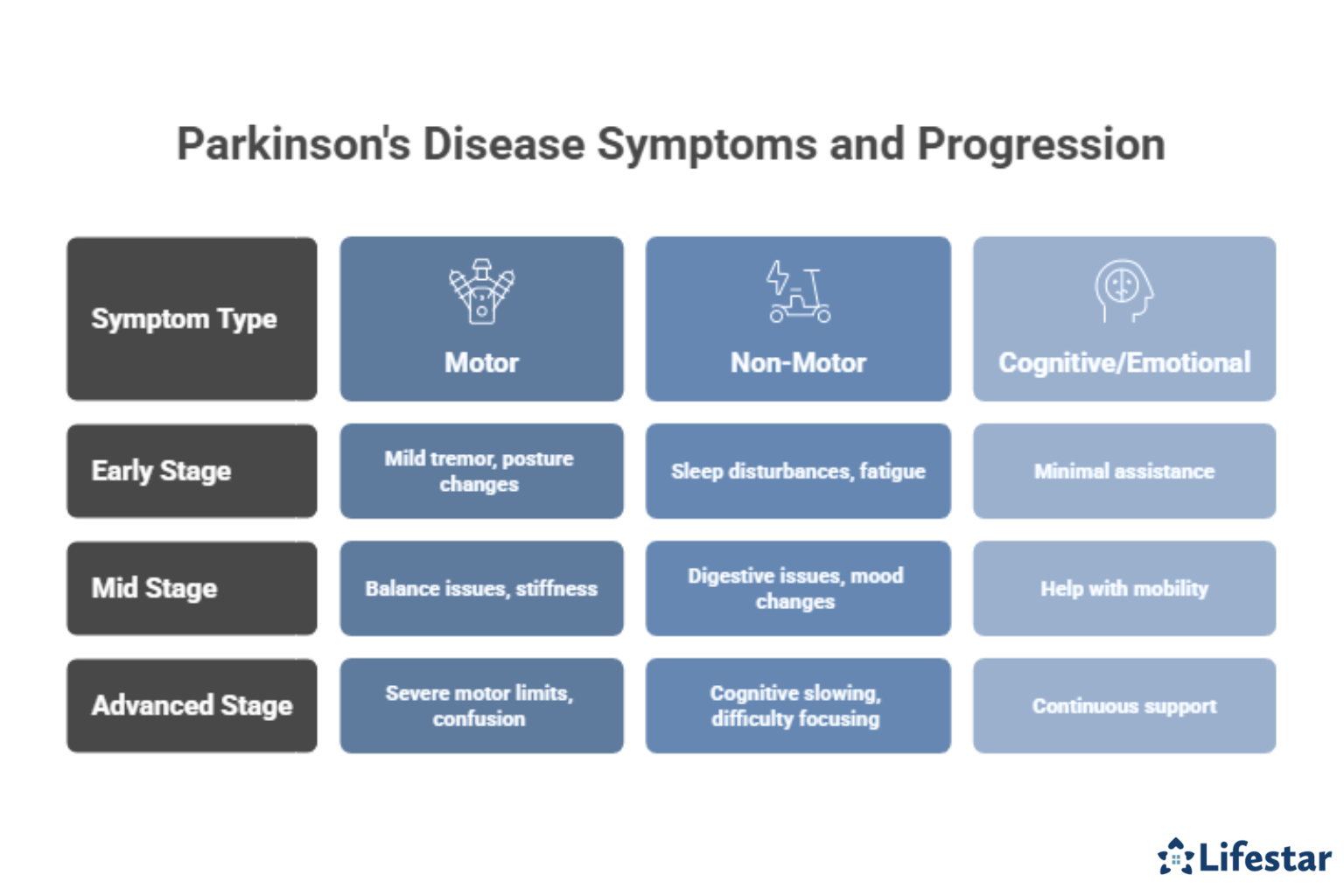
Parkinson’s disease progresses differently for each person, but symptoms generally intensify over time. Understanding progression helps families prepare for changing needs.
Parkinson’s Symptom Progression Overview
| Disease Stage | Common Symptoms | Daily Impact |
| Early Stage | Mild tremor, posture changes | Minimal assistance |
| Mid Stage | Balance issues, stiffness | Help with mobility |
| Advanced Stage | Severe motor limits, confusion | Continuous support |
This progression highlights why early planning is essential for long-term care decisions.
Daily Challenges Faced by Individuals with Parkinson’s
Living with Parkinson’s disease involves constant adaptation. Simple activities such as dressing, eating, or walking can become physically and mentally exhausting. Social withdrawal may occur as symptoms become harder to manage in public settings. Care strategies that focus on routine, patience, and personalized assistance can reduce stress. Families often find that flexible support options increase daily stability while allowing their loved ones to stay engaged with familiar environments.
Supporting Independence While Ensuring Safety
Maintaining independence is a top priority for many individuals diagnosed with Parkinson’s disease. Adaptive techniques, structured schedules, and safe living spaces can make a meaningful difference. A balanced approach that combines encouragement with practical assistance can reduce frustration. Professional caregivers trained in neurological conditions can support mobility, monitor symptom changes, and promote emotional wellbeing without overwhelming the individual.
How Home Care Service Helps in Managing Parkinson’s Symptoms
Home care services play a supportive role in helping individuals with Parkinson’s disease manage daily symptoms while staying in a familiar environment. Trained caregivers can assist with mobility support, medication reminders, meal preparation, and personal hygiene, which can become challenging as symptoms progress. They can also reduce fall risks, encourage gentle physical activity, and provide emotional reassurance during periods of anxiety or confusion. By offering consistent routines and one-on-one attention, home care services ease daily stress for individuals and families, allowing seniors to focus on comfort, safety, and maintaining as much independence as possible.
When to Seek Additional Support
As symptoms advance, family caregivers may feel overwhelmed managing physical care, emotional changes, and safety concerns. Recognizing when extra help is needed prevents burnout and improves outcomes for everyone involved. Professional care services offer consistency, specialized training, and relief for family members while keeping the individual comfortable and secure at home.
Parkinson’s Care Awareness with Lifestar Home Care in Oklahoma City
Recognizing the symptoms of Parkinson’s disease early can help families provide the right level of care and support. Lifestar Home Care assists families by offering personalized home care Oklahoma City services designed to support seniors living with Parkinson’s. Our caregivers help manage daily challenges such as tremors, stiffness, slow movement, and balance issues by providing mobility support, personal care, medication reminders, and companionship. By creating structured routines and a safe home environment, we help seniors maintain comfort and independence while giving families the support they need to manage this condition effectively.
Frequently Asked Questions
What is usually the first symptom of Parkinson’s disease?
+
The earliest symptom is often a slight tremor in one hand or finger. Some people notice stiffness or slowed movement before tremors appear.
Can Parkinson’s symptoms vary from person to person?+
Yes, symptoms and progression differ widely. Some individuals experience mainly motor issues, while others face more difficulty with non-motor symptoms.
Do Parkinson’s symptoms get worse over time?+
Parkinson’s disease is progressive, meaning symptoms generally worsen. However, the speed of progression varies between individuals.
Are non-motor symptoms common in Parkinson’s disease?+
Yes, non-motor symptoms like sleep problems, mood changes, and fatigue are very common and can be just as impactful as movement issues.
Can early support enhance quality of life?+
Early support can manage symptoms, maintain independence, and reduce stress for both individuals and their families.