Table of Content
Ensuring a senior loved one’s safety and wellbeing during medical emergencies is a crucial aspect of caregiving. Whether your loved one has experienced a fall, heart attack, or another sudden health complication, knowing how to respond promptly and effectively can make all the difference. Here’s a guide to help you manage medical emergencies with confidence and care.
Recognize the Signs of Common Medical Emergencies
Understanding the common signs of medical emergencies in seniors can facilitate faster intervention. Certain symptoms shouldn’t be ignored:
- Chest pain – This could indicate a heart attack. Look for signs like sweating, nausea, or shortness of breath accompanying the pain.
- Sudden confusion – Confusion or disorientation could indicate a stroke or other serious issue, especially if it’s sudden.
- Difficulty breathing – This could be an indication of respiratory distress or heart problems, requiring immediate medical attention.
- Fainting or dizziness – These could result from various causes like low blood pressure or dehydration, requiring a prompt response.
If you’re concerned about ensuring your loved one’s safety in case of an emergency, consider hiring a professional caregiver. Certain age-related conditions can make it more challenging for seniors to age in place safely and comfortably, but Oklahoma City live-in care experts are available around the clock to help seniors manage their health. Whether your loved one is living with dementia or recovering from a stroke, you can trust the professional caregivers from Lifestar Home Care to enhance his or her quality of life.
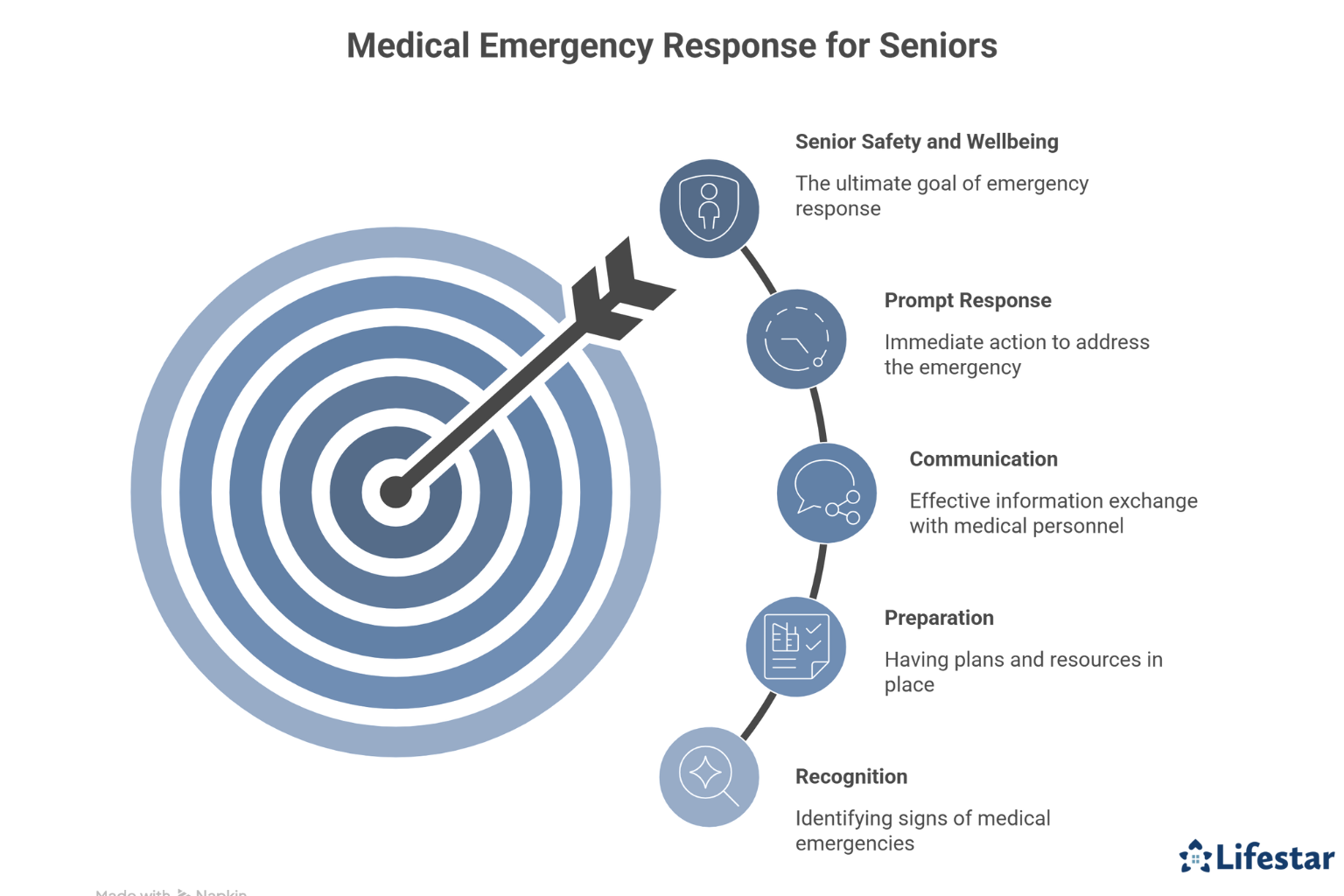
Prepare for Medical Emergencies
Having an action plan in place can significantly ease the situation when emergencies arise:
- Create an emergency plan – List key contacts, including doctors, family members, and the nearest hospital. Ensure this list is easily accessible.
- Put together a first aid kit – Equip the home with a well-stocked first aid kit and routinely check it to ensure all supplies are current and complete.
- Make a list of medications – Keep an up-to-date list of medications your loved one is taking, along with dosages and any known allergies, to share with medical personnel.
- Educate yourself – Familiarize yourself with basic first aid and CPR techniques through courses, which can be extremely beneficial during critical situations.
A professional caregiver can help you put together a complete emergency plan for your loved one. Many seniors prefer aging in place over moving to assisted living facilities. If your senior loved one needs assistance to remain safe and comfortable while living at home, reach out to Lifestar Home Care, a leading senior care agency. Our dedicated in-home caregivers can assist with meal prep, bathing and grooming, exercise, medication reminders, and many other important tasks. It’s also essential to stay informed about the warning signs of strokes in seniors to act quickly if a stroke occurs.
Respond Promptly to a Medical Emergency
Taking prompt and calm action is critical in an emergency:
- Stay calm – Panic can hinder your ability to act quickly and effectively, so try to remain composed.
- Call for help – If the situation is serious, call 911 immediately, providing clear details to the dispatcher about your loved one’s condition and location.
- Provide assistance – Follow basic first aid or CPR techniques if necessary until emergency services arrive. Ensure your loved one is comfortable and reassure him or her that help is on the way.
Communicate with Medical Personnel
Effective communication with medical professionals is vital during emergencies:
- Share information – Provide all relevant medical history and the events leading to the emergency. This information is crucial for an accurate diagnosis and treatment.
- Ask questions – Don’t hesitate to inquire about your loved one’s condition and the immediate steps that need to be taken.
- Follow up – After the event, ensure you have clear instructions on post-emergency care and any follow-up appointments required.
There are a variety of age-related health conditions that can make it more challenging for seniors to live independently. However, many of the challenges they face can be easier to manage if their families opt for professional home care. Oklahoma City families can rely on expertly trained caregivers to keep their loved ones safe and comfortable while aging in place. Trust your loved one’s care to the professionals at Lifestar Home Care. To create a customized home care plan for your loved one, call us today.